Weather in Rome

Weather Icon

Italy Rome Tour Blog

Travel tips, Food, Lifestyle, Street Art, Events and Exhibitions in Rome and all around Italy.

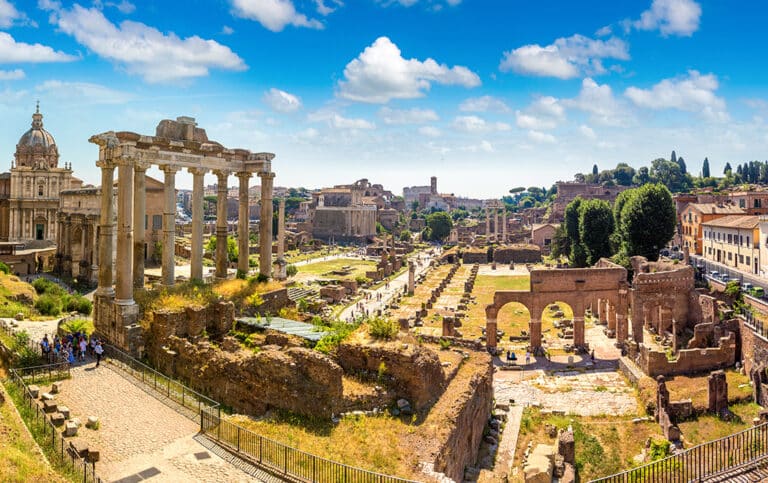
roman forum

Rome has a secret name, which very few know

Did you know? Rome also has a secret name, which very few know. Rome has also had another secret name since ancient times and it has always been a sacrilege to pronounce it. What was this name and what happened to Ovid who tried to reveal it? Many anecdotes are linked to the names of Rome. According to a widespread tradition in antiquity, a city had three names: a sacred one, a public one and a secret one. The public name of Rome was joined by the religious name of Flora or Florens, used on the occasion of certain sacred ceremonies, the secret one has remained unknown. The reason and the need for this secrecy goes back to another tradition widespread among the ancients (but also in some non-Western contemporary cultures) and which is also found in the history of the origin of writing: the name of an object or entity it expressed the essence and energy of the object or entity it defined. Naming something was equivalent to making it alive and existing and knowing the name meant, in

Read More
spanish-steps-by-night

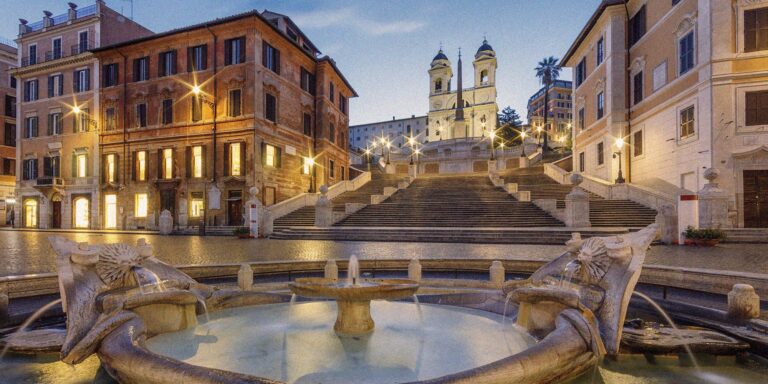
The Spanish Steps in Rome

The magnificent stairway of Trinità dei Monti, an eighteenth-century masterpiece, was built between 1723 and 1726 by the architect Francesco De Sanctis. The structure served as a link between the slopes of the Pincio dominated by the church of the Santissima Trinità and the underlying Piazza di Spagna. The stairway, in travertine, is made up of a series of ramps, 11, each made up of 12 steps, which divide and reunite, constantly changing direction. From any position it is possible to enjoy a magnificent panorama of the square De Sanctis managed to get the better of the project presented by Alessandro Specchi after long and heated discussions on how the steep slope on the Pincio side should be connected to the church. The staircase was made famous by cinematography but above all by the love of tourists who, before the Coronavirus emergency, used to crowd it (and not only them) at any time of day. A series of balustrades accompanies the ramps: they interrupt the difference in height and serve as a resting point and to admire the landscape. The

Read More
trevi-fountain-ocean

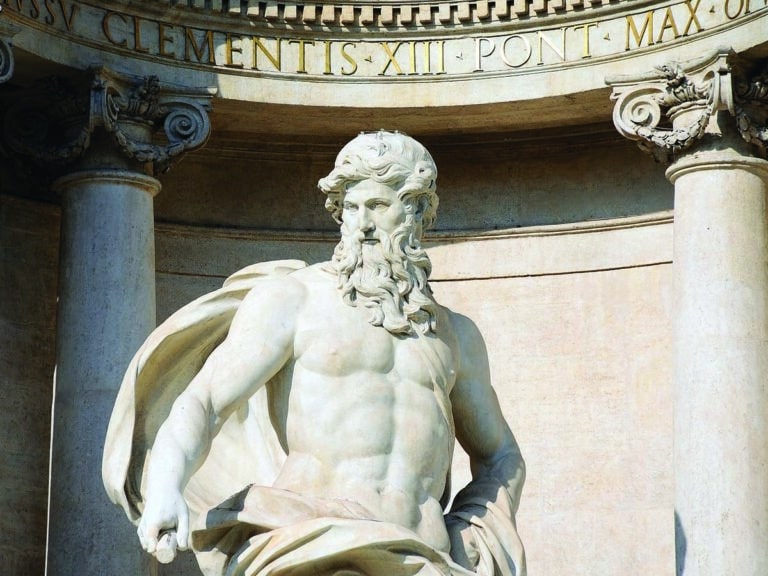
The position of the famous “ace of Cups” of the Trevi Fountain may not be accidental

Despite the notoriety of the work, there may be village stories linked to some elements of the fountain. One would concern “the Ace of Cups”, a large travertine vase positioned on the right end of the fountain. The Trevi Fountain is certainly one of the most popular and well-known works in Rome. Today it is the destination of millions of tourists who come from all over the world and who delight in the famous rite of tossing a coin, a wish for a speedy return to the capital. For the realization of this extraordinary work it took almost thirty years and perhaps we can also understand why considering the fame enjoyed by the fountain. It was 1731 when Pope Clement XII instituted a competition for the construction of a fountain on the facade of Palazzo Poli. It seems it should have been built by a French sculptor, Lambert Sigisbert Adam, but then, due to a series of still unclear circumstances, the task was entrusted to Nicola Salvi. Some hypothesize that the papal preference was for an Italian client, others argue

Read More
saint-paul-door-rome

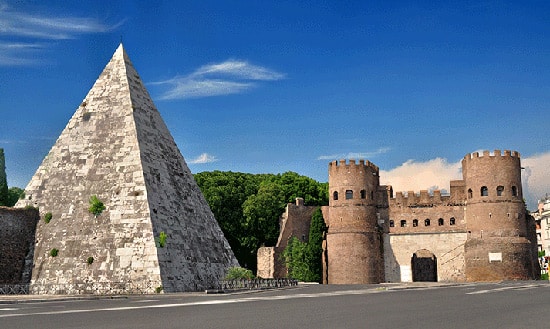
The city walls of Rome: Saint Paul Door

After talking about the Porta Latina and the origin of the word Lazio associated with it, we dedicate our article to one of the most impressive and best preserved of the gates of the Aurelian Walls in Rome. The name is due to the fact that it is located near the exit for the Basilica of San Paolo outside the walls. The Gate has two huge towers with a circular base and originally two arches, it once took the name of Porta Ostiensis because the via Ostiense starts here and reaches the sea of Ostia between via Marmorata and viale Aventino. Over the years the port of Ostia lost its significant role for trade and the name of Paolo was increasingly associated with the port. The collection of the toll for the relative transit took place nearby. (In this regard, the customs scene in the film “We just have to cry” is memorable, where the transit – in another area – is repeatedly asked: “Who are you. What do you do? A Fiorino” filmed at the Castle of Rota ,

Read More
christmas-world-2022-roma

Christmas World opens in Rome: all the magic of Christmas around the world at Villa Borghese

After the great success of 2021 at the Auditorium Parco della Musica, Lux Eventi has announced that Christmas World, starting this year, will be organized in the most prestigious historical park in Rome, Villa Borghese. The Rockefeller Center ice rink, the illuminated Eiffel Tower, the snow-capped Bavarian houses, the lights on the Thames and Santa Claus’ village at the North Pole: the splendid park of Villa Borghese, the green jewel of monumental Rome, turns into a journey Christmas around the globe between New York, Paris, Berlin, Tokyo, Rome, London and the North Pole. BOOK YOUR ROME IN ONE DAY TOUR From December 3rd to January 8th in the Galoppatoio area, Christmas World will transport adults and children on a journey to discover the Christmas traditions spread all over the planet: an immersive experience in the most important and eagerly awaited celebration of the year through activities, concerts, entertainment and a Christmas parade that will take place every day in the tree-lined avenues of the most beautiful park in the capital. New York will be represented by the reproduction of the

Read More
rome-Chiesa-del-Sacro-Cuore-del-Suffragio-even-called-small-Duomo-of-Milan

Did you know that in Rome there’s a small “Duomo di Milano” in the heart of the city?

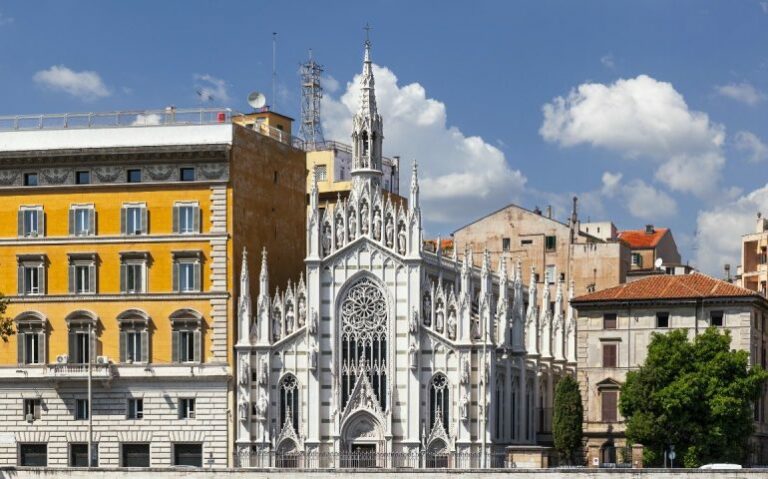
You won’t believe your eyes: you are in Rome but for a moment you will seem to be in Milan. The Romans, who know it well, call it “little Duomo of Milan”. Let’s discover together the many curiosities related to this church. It is located on Lungotevere Prati, in the midst of buildings of a very different architectural style, not far from the Palace of Justice. This is the Church of the Sacred Heart of Suffrage, a small neo-Gothic jewel in the heart of Rome. The nice name given to it is naturally due to the incredible resemblance to the more famous Milanese church. The external facade, in fact, full of spiers and pinnacles, recalls the Cathedral of the Lombard capital. The construction of the church began in 1908 and the project was entrusted to the engineer Giuseppe Gualandi who was inspired, in the choice of style, by the Gothic from beyond the Alps. The building was completed in 1917 and blessed and opened for worship on 1 November of the same year; the following 10 December the parish was

Read More
roma-park

Rome is the city with the most green spaces in Europe and one of the first in the world

Rome is the city with the most hectares of greenery in Europe, an important record due in large part to the choices of many of its popes. Villa Doria Pamphili, the largest in Rome, Villa Ada, Villa Borghese and many other historic villas were born as country estates, with large areas dedicated to hunting, of noble Roman families who have had popes and cardinals among their members. Thanks to this legacy, Rome has no equal in the world, not only for its historical-archaeological, landscape and architectural beauties but also for the extension and variety of greenery which represents 67% of the municipal area or 85,000 hectares out of a total of 129,000. The numbers of the Ansa note say that the public green within the urban fabric is made up of urban parks, historic villas, public gardens, flower beds and green areas for furniture for a total of 3,932 hectares. Then there are the Parks and Nature Reserves scattered among the suburbs until you get close to the center. Among the 18 protected areas, there are the Castel Fusano, the

Read More
Colosseum-tour-first-level

The Emperors arrived in the Colosseum using a secret passage

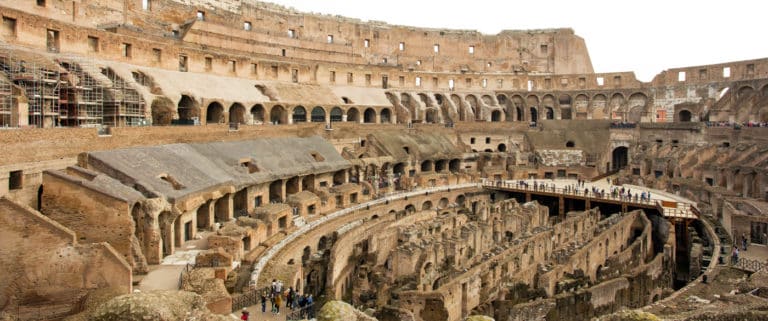
The Emperors arrived in the Colosseum using a secret passage. Under the Flavian Amphitheater, a gigantic structure for shows built in the imperial era, there is (and has recently been included in a recovery project), a dense series of tunnels that allowed gladiators, beasts and workers to move, work and enter the scene without being seen by the public, if not at the last moment. One passage in a particular way allowed the emperor to appear unexpectedly on stage: a spectacular move that allowed him to show himself to the public suddenly and in the middle of the same show. The Colosseum is the most grandiose spectacle machine of antiquity and behind the scenes it hid and hides a very complex underground world, invisible to the nearly 80,000 people sitting in the stands. In this labyrinthine underground citadel everything was functional to the staging on the arena: the arrival and deployment of the gladiators, the passage of the beasts from the cages to the arena. But also the entrance of the emperor escorted by the praetorian guard who entered the

Read More
Forum-boario-rome

The oldest building standing in the Eternal City

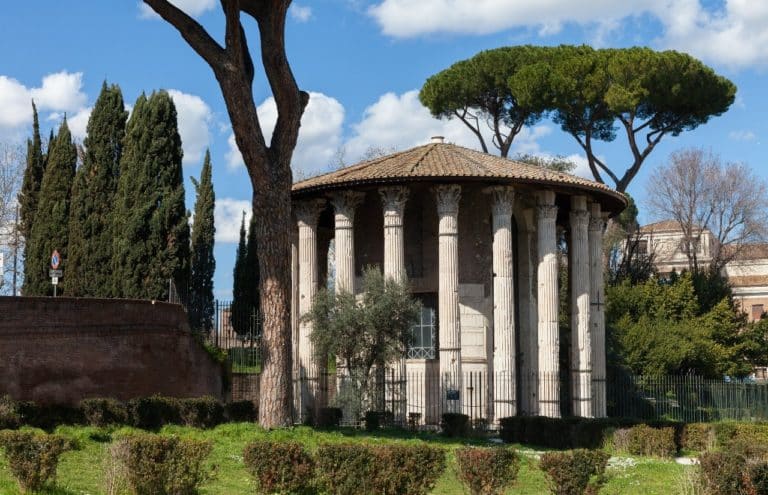
The oldest building standing in Rome is the temple of Hercules Victor and dates back to the second century BC and today represents the oldest building in Rome still standing. This temple is sometimes still referred to as the Temple of Vesta and the error is due to its circular shape which makes it similar to the real Temple of Vesta located in the Roman Forum. All this due to an incorrect attribution, born during the Renaissance. A curious peculiarity that makes it even more mysterious and fascinating. The temple is circular in shape with twenty Corinthian columns surrounding the cylindrical cell and rests on a ring foundation on a tuff block platform. A favissa opens in the floor of the cell, a place where the ancient Romans deposited votive objects, consisting of a deep well, where the burnt remains of sacrifices were collected. ROME TOUR AVAILABLE HEREThis temple confirms the economic power that the Roman merchants had. In fact, it is said that a rich merchant commissioned this work which was dedicated to Hercules protector of the oil producers,

Read More

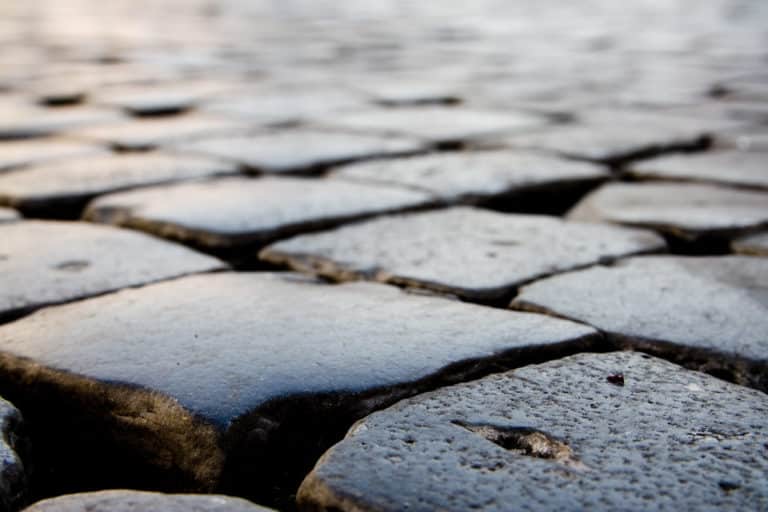
Why are the Roman sampietrini so called?

The term “sampietrini” indicates the typical pavement of the historic center of the capital. Do you know why they are called that? The name “sampietrino” or “sanpietrino” (also called “selcio”) derives from the place where this small block of flint, extracted from the quarries located at the foot of the Alban Hills and from the volcanic areas of Viterbo, was used for the first time, precisely in St. Peter’s Square. The sampietrino represents a type of pavé. Technically it is a block of leucitite (an eruptive rock typical of the volcanic areas of Lazio) used for the construction of the road paving commonly used in the historic center of Rome to pave streets or squares. There are different types and sizes: the largest measure 12 × 12 × 18 cm; the most common ones measure 12 × 12 × 6 cm; while the smaller ones, 6 × 6 cm, are very rare but are found in some of the historical places of Rome, such as in Piazza Navona. They were conceived in the sixteenth century to facilitate the passage of

Read More