Weather in Rome

Weather Icon

Italy Rome Tour Blog

Travel tips, Food, Lifestyle, Street Art, Events and Exhibitions in Rome and all around Italy.

ancient rome

Where did people go to pick up girls in ancient Rome?

In ancient Rome, there were several places where people could socialize and consequently, meet potential romantic or sexual partners. In ancient Rome, social life was full of opportunities to create bonds and cultivate relationships, both romantic and purely social. The city offered a wide range of public and private spaces where people could meet, share moments of conviviality and, often, get close to potential partners. The forums, for example, were the beating heart of city life, meeting places where citizens of all social classes gathered to discuss politics, business or simply to spend time together. In this context, it was not uncommon for glances, conversations and mutual attraction to lead to the birth of personal relationships. The baths also played a central role in daily life. These complexes were not only spaces dedicated to hygiene and relaxation, but real centers of socialization. Here men and women, at separate times or in distinct areas, could converse, observe and establish bonds that sometimes went beyond simple friendship. Another fundamental setting for personal interactions were the banquets and private parties organized by the

Read More
circus-of-nero-roman-empire

St. Peter’s Square and the Circus of Nero

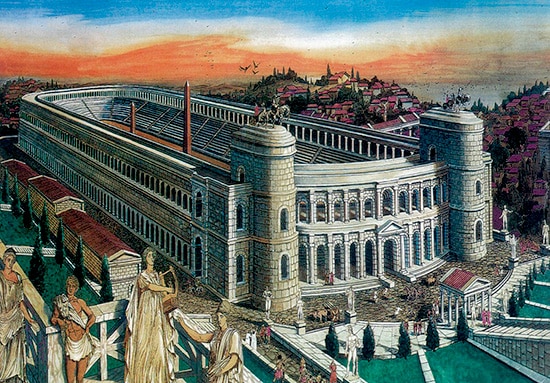
Did you know? In imperial times, in Rome, where there is St. Peter’s Square, the Circus of Nero stood. Nero’s Circus stood in St. Peter’s in the Vatican, before the square and the Basilica were built? Right here, in fact, there was an installation for shows, about half a kilometer long. Chariot races, circus performances, Christian executions (including that of St. Peter’s): these are the events hosted, for the amusement of the emperor. The circus of Nero was a spectacle plant of ancient Rome 540 meters long and about 100 wide, which stood right in the place where today the basilica of St. Peter in the Vatican is located, in a valley that went from the left side of today’s basilica to almost to get to the Tiber. The Carceres area, from where the chariots left, was located at the point from which the Via del Sant’Uffizio leaves Piazza Pio XII, while that of the curved side can be traced a few tens of meters after the apse of St. Peter’s Basilica. The work, begun by Caligula and completed by

Read More
church-santa-Pudenziana-Rome

Which is the oldest church in Rome?

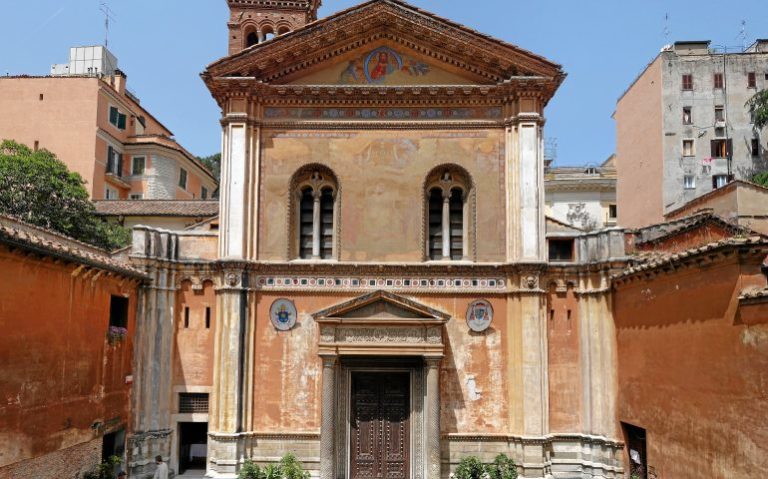
Two churches on contend for the title of oldest churches in the capital: Santa Prisca and Santa Pudenziana, both linked to the first Christians and to the figure of Peter. It must be said that the first basilicas built by Constantine are San Pietro and San Giovanni in Laterano, even if their present appearance has nothing to do with the structures built by the first Christian Emperor. Lately, however, the idea based on specific studies has been spreading that the oldest Christian church is precisely that of Santa Pudenziana, which houses one of the most beautiful and ancient mosaics in Rome. If the dates hypothesized by historians were true, the basilica would have been built around 380 AD. The mosaic immediately after: between 410 and 417 under the pontificate of Innocent I (pontiff from 401 to 417). Therefore, it would be the oldest mosaic made inside a Christian church in Rome. The mosaics of the Mausoleum of Santa Costanza, in fact, although they are older, were not made in a church but in a mausoleum. Furthermore, they do not represent

Read More
Basilica-Santa-Maria-in-Trastevere

The oldest Fountain in Rome

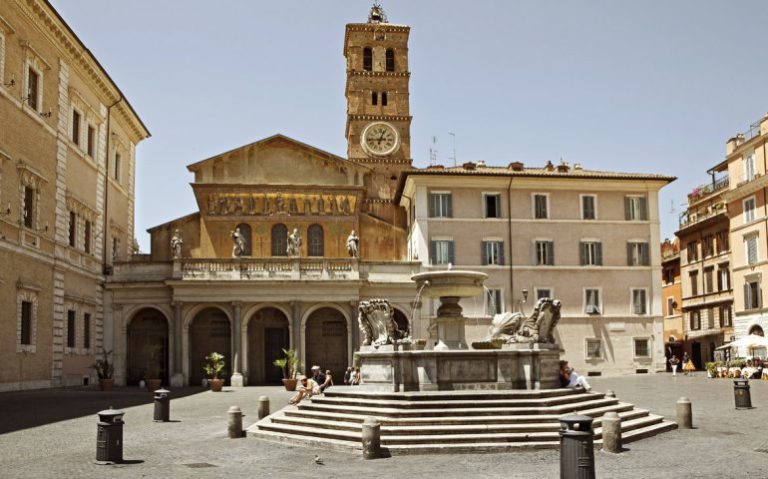
Did you know? The oldest fountain in Rome, still working, is the one located in front of the basilica of Santa Maria in Trastevere. This wonderful monument was designed by Donato Bramante starting from an imperial fountain, over time it was then modified first by Gian Lorenzo Bernini and then by Carlo Fontana. Let’s go and discover all the secrets. Over the centuries, Pope Adrian I wanted the pre-existing fountain to be restored and since then documentary traces have been lost until 1450. On the occasion of the jubilee, under the papacy of Niccolò V Parentucelli, a square basin was built on a short staircase. Two circular-shaped basins were placed in the center, one above the other, both supported by a column. Between 1496 and 1501 Bramante put his hand to the fountain. He decorated the remaining upper basin with wolf heads: the water gushed from their mouths to fall back into the lower basin. At the end of the sixteenth century Giovanni Fontana carried out a radical intervention on the same work to change its appearance. The base basin

Read More
the-death-of.julio-caesar-Vincenzo-Camuccini

Why was Julius Caesar killed?

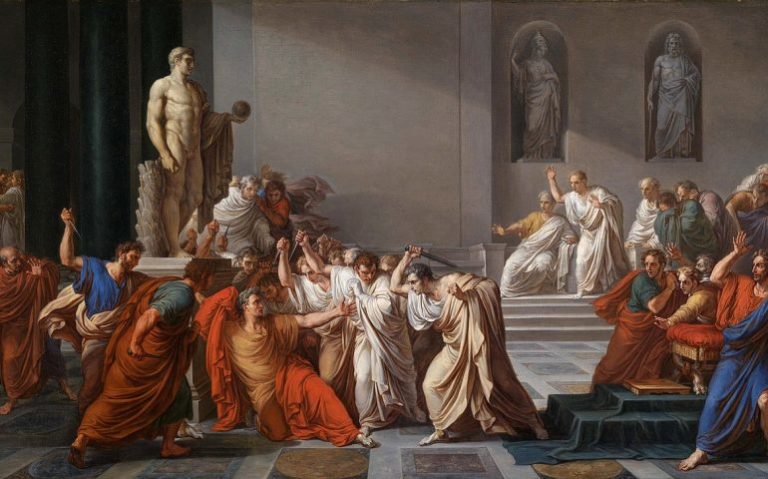
Everyone knows Julius Caesar, but few know why this very important figure of ancient Rome was really killed. Let’s find out together. Gaius Julius Caesar was a Roman military, politician, consul, dictator, pontiff, orator and writer, considered one of the most important and influential characters in history. He played a pivotal role in the transition of the government system from republican to imperial form. He was dictator of Rome at the end of 49 BC, in 47 BC, in 46 BC. with ten-year office and from 44 BC as perpetual dictator, and for this reason considered by Suetonius the first of the twelve Caesars, later synonymous with the Roman emperor. With the conquest of Gaul, he extended the dominion of the Roman res publica to the Atlantic Ocean and the Rhine; he led the Roman armies to invade Britain and Germany for the first time and to fight in Spain, Greece, Egypt, Pontus and Africa. Cesaricide is defined as the assassination of Caesar, which took place on March 15, 44 BC. (the Ides of March), by a group of about

Read More

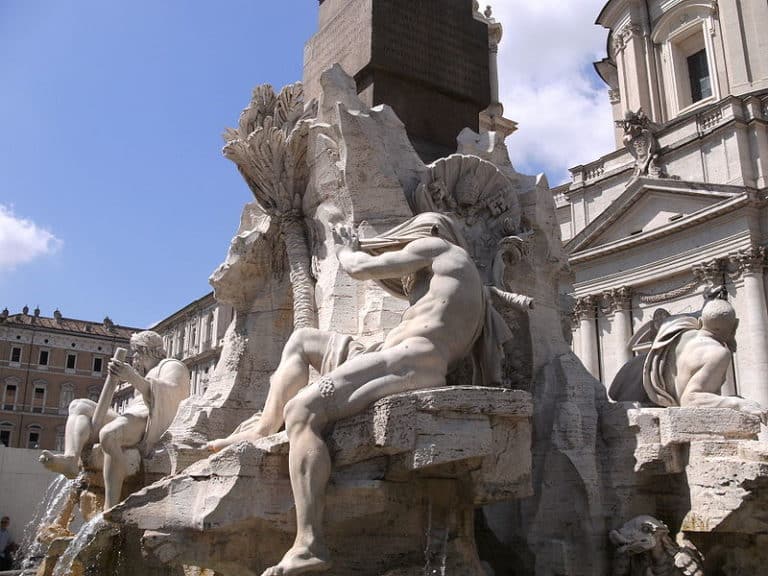
The Fountain of the Four Rivers in Piazza Navona

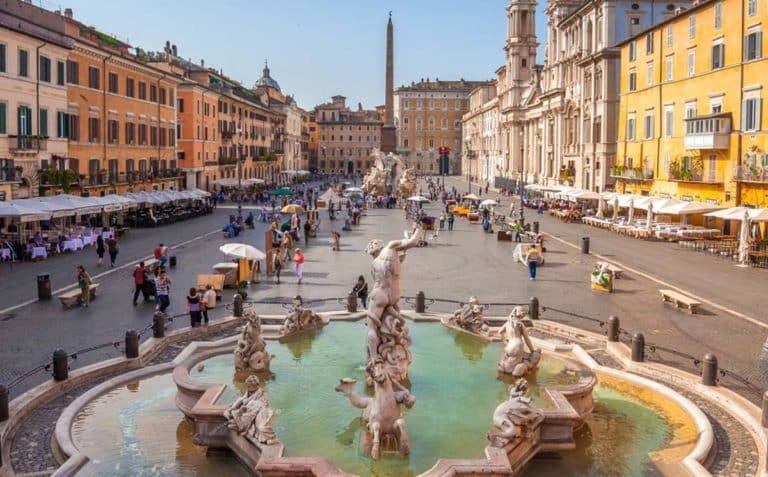
The fountain located in Piazza Navona, called the Four Rivers, is one of the most beautiful and famous in the world. A masterpiece of Baroque art, it was designed by the immense Gian Lorenzo Bernini on a direct commission from Pope Innocent X in 1651. The fountain dominates the square, one of the most beautiful in the city, and the four famous statues that symbolize the four rivers that represent four different continents. Let’s find out which are these 4 rivers of the 4 great continents of the Earth and all the other curiosities related to this authentic artistic marvel. Just think that until 1800 the fountain was used to cool the square on hot August days, closing the drains.The fountain portrays the four main rivers of the Earth, one for each continent then known: Nile in Africa, Danube in Europe, Rio de la Plata in South America and Ganges in Asia and is dominated by the Agonal obelisk, coming from the circus of Maxentius on the Appia Antica, (the appian way). The fountain stands in the center of the

Read More
Interior-pantheon-rome

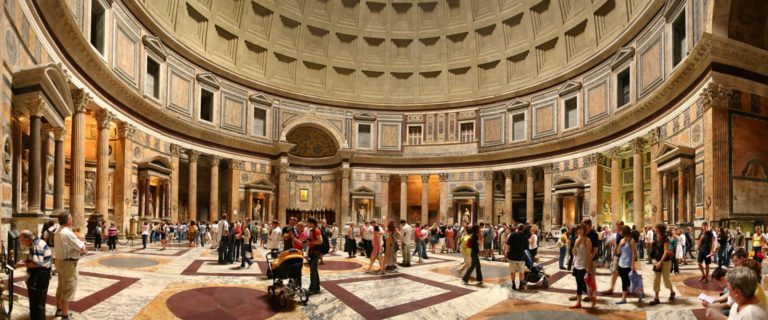
The Pantheon has been a Christian church for more than 1400 years

During the Early Middle Ages the Pantheon was transformed from a pagan temple to a Christian church. In 608 Pope Boniface IV had the remains of some martyrs found in the Christian catacombs moved to the Pantheon, a marvelous Roman monument. From a pagan temple it became a Christian church devoted to Santa Maria and the Martyrs. All this allowed the structure to survive almost intact to the looting inflicted by the popes on the buildings of classical Rome Suddenly, in the streets of central Rome, you will find yourself in front of one of the most beautiful and grandiose monuments ever built by man. An imposing, spectacular structure, the most visited Italian site in 2019: the Pantheon will turn two thousand years in 2027, an extraordinary building, built in the imperial era, which has been perfectly preserved and is one of the most admired symbols of the capital. The Pantheon, located in the Pigna district, in the historic center, is a building of ancient Rome built as a temple dedicated to all past, present and future divinities. It was

Read More
herbalife nutrition

Introducing Herbalife Nutrition

We are so happy to introduce you our New Sponsor. From 2021 Herbalife Nutrition Ltd. has been Italy Rome Tour Company’s Partner. HB is a global multi-level marketing (MLM) corporation that develops and sells dietary supplements. The company was founded by Mark R. Hughes in 1980, and it employs an estimated 9,900 people worldwide. The business is incorporated in the Cayman Islands, with its corporate headquarters located in Los Angeles, California. The company operates in 94 countries through a network of approximately 4.5 million independent distributors and members. John O. Agwunobi has been the company’s chief executive officer and executive chairman since March 2020. SUPPORT THE PROGRAM AND JOIN US: PURCHASE YOUR PRODUCTS HERE: YES TO NUTRITION FROM NUMBERS ONE Yes to easy-to-prepare healthy meals. From the field to your table, our goal is to make balanced nutrition simple. We do everything to make sure that our smoothies, snacks and drinks are not only tasty, but also suitable for you. Together with a team of nutrition scientists and manufacturers, we travel the world in search of the best suppliers and the best ingredients. Responsible agriculture and advanced production methods are essential to

Read More
trevi fountain rome

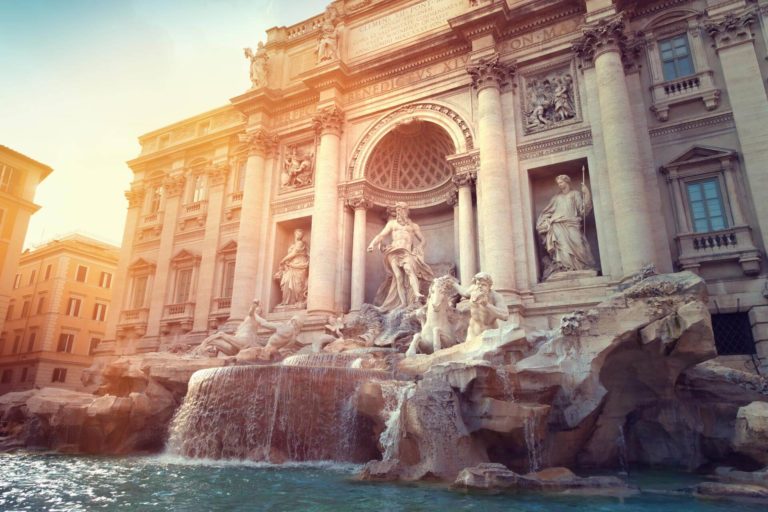
A legend about love is also linked to the Trevi Fountain

It is said that until recently, girls used to make their boyfriends drink the water from the fountain, which is located right next to the famous monument, before they left: the young women filled a glass never used before, the men they drank and then the glass had to be broken to make sure they didn’t lose love. When water was still drawn from the fountain to drink (and the Trevi water, which today is used only for irrigation and to feed the fountains, was considered among the best in Rome, not to be calcareous) the girls made them drink a glass to the boyfriend who was leaving, a glass which they then shattered as a sign of good wishes and fidelity. In this way the engaged couple would be faithful and on their return they would go straight back into the arms of the loved one. This habit has its roots in an anecdote from Ancient Rome, when the soldiers of Agrippa’s army in 19 DC. returning to the city by now exhausted, following a girl’s instructions, they quenched

Read More
circus maximus

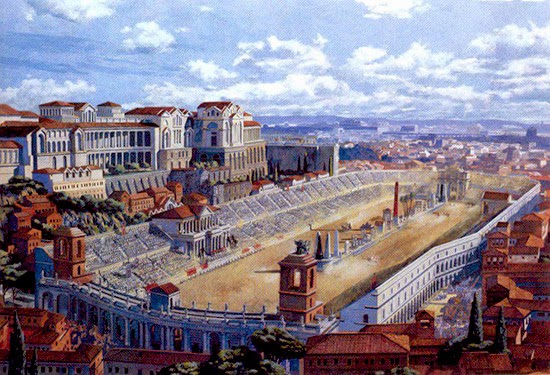
Roman monuments: the Circus Maximus in Rome, the largest stadium in history

The Circus Maximus of Rome (or rather what remains) is the largest stadium in history, the largest man-made structure for performances. It was located between the Aventine and the Palatine Hill, and had a capacity of 300,000 spectators. Let’s go and discover all the secrets. Its sandy track, 600 meters long and 225 meters wide, made it the largest stadium in Rome, larger than the Circus Flaminio and the Circus of Maxentius. Legend has it that here, right in the valley, the mythical episode of the rape of the Sabine women took place on the occasion of the games organized by Romulus in honor of the god Consus. Around the circus it was adorned with magnificent arcades, and had two rows of seats. Inside there was a long, wide wall, called Spina, around which chariot races were disputed. Above there were two obelisks, and some temples. The spine was richly decorated with statues, aedicules and temples and there were seven eggs and seven dolphins from which water gushed, used to count the laps of the race. The twelve carceres, the

Read More