Weather in Rome

Weather Icon

Italy Rome Tour Blog

Travel tips, Food, Lifestyle, Street Art, Events and Exhibitions in Rome and all around Italy.

santacostanza-rome

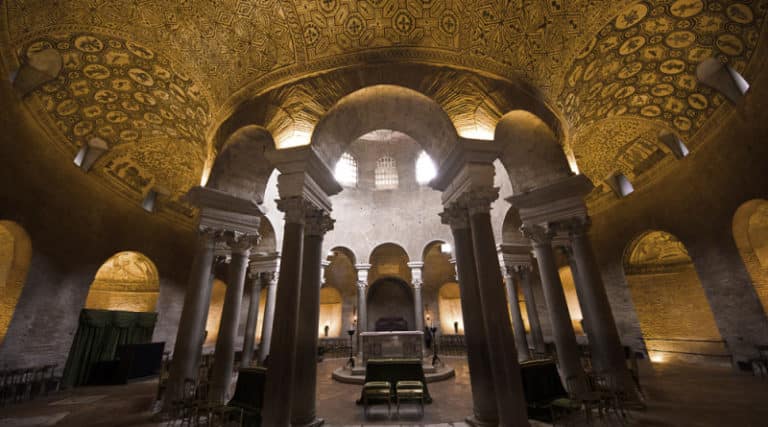
Hidden Rome, The mausoleum of Santa Costanza

Hidden Rome, The mausoleum of Santa Costanza, better known as the mausoleum of Santa Costantina, it is a magnificent Catholic church, located within the monumental complex of Sant’Agnese fuori le mura, in Via Nomentana. Let’s find out all its peculiarities and some curiosities together. It was built between 340 and 345, as his own mausoleum, by Constantina, daughter of Constantine I, close to the Constantinian basilica, near the tomb of Saint Agnes, of which Constantina was a devotee. Both Constantina and her sister Elena were buried there. The building was called “Santa Costanza” when Constantina was venerated as a saint. The building introduces motifs of early Christian architecture, while representing the final phase of late ancient Roman architecture. The mausoleum has a central plan with a circular space covered by a dome and illuminated by twelve arched upper windows that define a luminous band around the tambour. The dome rests on 12 pairs of columns arranged in a ring. Externally the columns delimit an annular corridor covered by vaults. This structure creates spaces strongly characterized by the contrast between light

Read More
cript-bones-cappuccini-rome

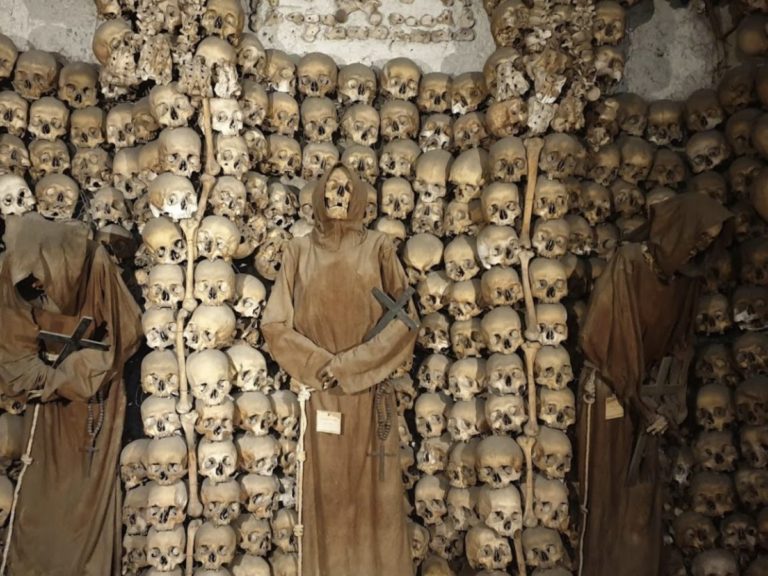
The Church of the Bones

Roman monuments: the Church of Santa Maria Immacolata, decorated with the bones of 4000 Capuchin friars. The Church of Santa Maria Immacolata is located in via Veneto 27 and is a decidedly unusual place. It was built between 1626 and 1631 at the behest of Pope Urban VIII, in honor of his brother Antonio Barberini who was part of the order of the Capuchin friars. The crypt-ossuary of the church is decorated with the bones of over 4,000 friars, with skulls and bones on the walls and ceiling, skeletons of friars in habit leaning against the walls, crosses on the ground and many other symbols related to death. The church was designed by Michele da Bergamo and is also famous for some beautiful works. In fact, important paintings adorn the chapels, such as the Archangel Michael chasing Lucifer by Guido Reni, the Nativity by Giovanni Lanfranco, the San Francesco receiving the stigmata, by Domenichino, the Transfiguration by Mario Balassi. The vault was frescoed in 1796 by the neoclassical painter Liborio Coccetti, with the theme of the Assumption of the Virgin

Read More
mouth-of-the-truth-rome

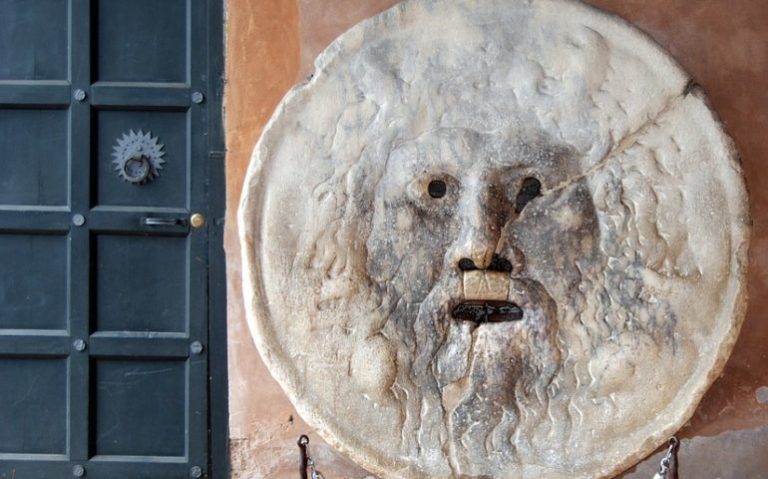
The famous Roman Mouth of the Truth was the manhole of a sewer

Who would have thought: over the centuries a manhole in the Cloaca Massima has become one of the most loved and photographed Roman monuments by tourists. The Bocca della Verità is an ancient mask in pavonazzetto marble, walled into the wall of the pronaos of the church of Santa Maria in Cosmedin in Rome since 1632. The mask represents a large bearded male face; eyes, nose and mouth are pierced and hollow. The face has been interpreted over time as a representation of various subjects: Jupiter Ammon, the ocean god, an oracle or a faun. The object is mentioned in the first Mirabilia Urbis Romae, an ancient medieval guide for pilgrims, where the mouth was assigned the power to formulate oracles. In the Middle Ages the legend spread that the Mouth of Truth was built to dispel doubts about the fidelity of husbands and wives. The name “Mouth of Truth” appeared in 1485 and the sculpture has since always been mentioned among the Roman curiosities and was reproduced in drawings and prints. Originally the mouth was located outside the church

Read More
raphael painting

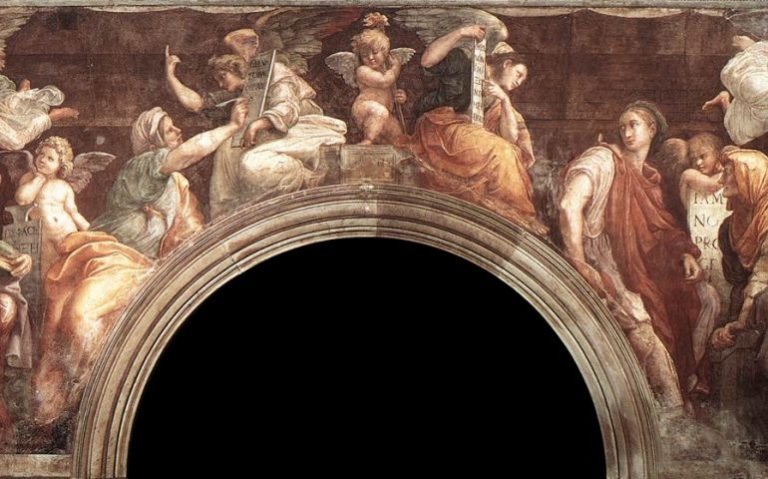
In Rome there is a church that houses a wonderful fresco by Raphael

The amazing fresco “The Sibyls” by Raffaello Sanzio is located inside the Basilica of Santa Maria della Pace: it can be admired from the Sala delle Sibille, on the first floor of the Bramante Cloister, next to the Caffetteria Bistrot. The frescoes are found in the Chigi chapel and were commissioned by the wealthy Sienese banker Agostino Chigi to Raphael. Let’s go and visit this wonder. The painter imagined two large arches, one with the figures of the Sibyls and the other with the figures of the Prophets. Of the two, only that of the Sibyls is attributed to Raphael. The arch of the Sibyls dates back to 1514. Raffaello Sanzio was an Italian painter and architect, one of the most famous of the Renaissance. Considered one of the greatest artists of all time, his work marked an essential path for all subsequent painters and was of vital importance for the development of the artistic language of the centuries. The frescoes of the Sibyls and Angels are a splendid example of formal beauty and erudition. As reported by the website

Read More
Piazza navona

The terrible story of the marble head in Piazza Navona

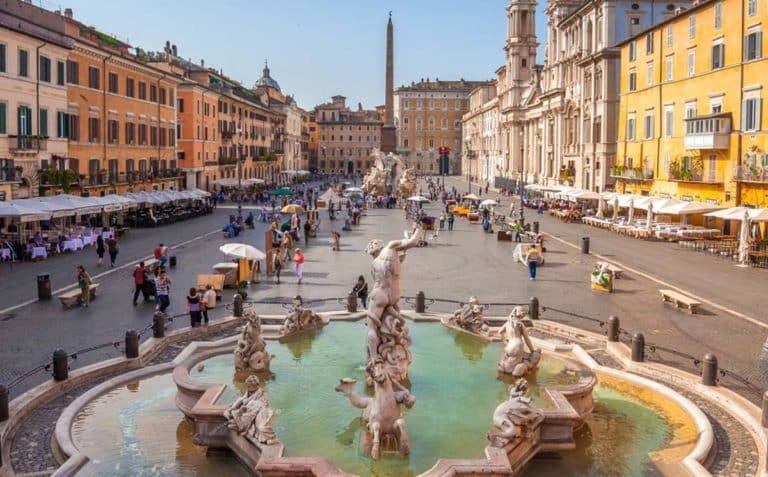
In a Roman palace in Piazza Navona, precisely at number 34, it is possible to see a marble head protruding solitary from the facade. Why is there this isolated face and what does it represent? A popular tradition that has been handed down over the centuries tells that in the second half of the sixteenth century Pope Sixtus V loved to mix with the crowd, disguised as a commoner, to measure his level of popularity among the Romans. The Pope took off his papal clothes, dressed in other less elegant clothes and, mixing with plebeians and common people, listened, trying not to be recognized, that people really thought of him. One day, while entertaining himself in an osteria in Piazza Navona, he listened and heard the speeches of an innkeeper, who made very critical judgments towards the papal power. In fact, the innkeeper complained, repeatedly insulting the Pope, because of a new tax on wine. The next day the innkeeper found a gallows mounted in front of his tavern and this made him happy, because he was looking forward to

Read More
st peter dome rome

From the keyhole of the Villa del Priorato di Malta you can see the Dome of St. Peter

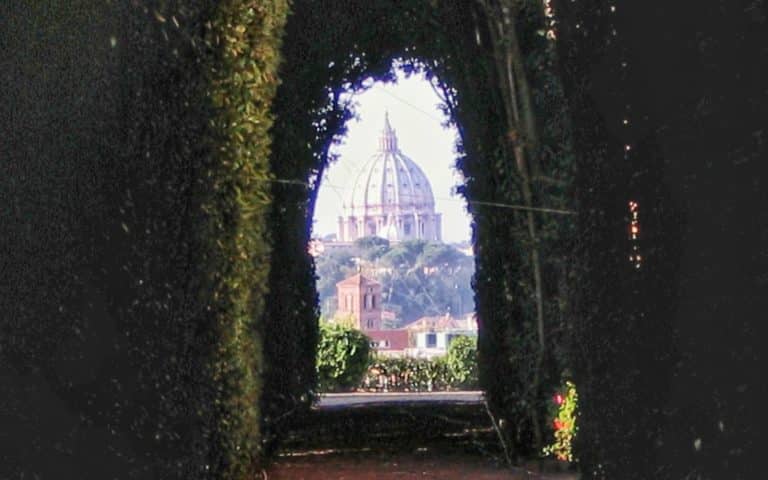
Have you ever seen Sorrentino’s Movie La Grande Bellezza? There is a scene in which the Dome of San Peter is seen… …in the middle of the hedges: it is the Villa of the Priory of Malta, in Piazza dei Cavalieri di Malta, on the Aventine Hill. If you happen to pass nearby, from the keyhole of the large door you can admire the same image. The dome of St. Peter’s Basilica as you’ve never seen it before. The keyhole is the destination of a continuous pilgrimage but not of mass because it is located in an area not very touristy. It is located on the highest part of the Aventine hill, between the Orange Garden and the villa of the Priory of Malta, in the heart of the Circus Maximus area. The emotion of the view for the unwitting tourist is unique. Spying and watching something incredible at the same time: the Dome of San Pietro in a new and singular perspective. And for tourists it seems that the sunset is just the best time to watch from that

Read More
rome churches tour

Did you know? The church with the dome that can be seen but is not there

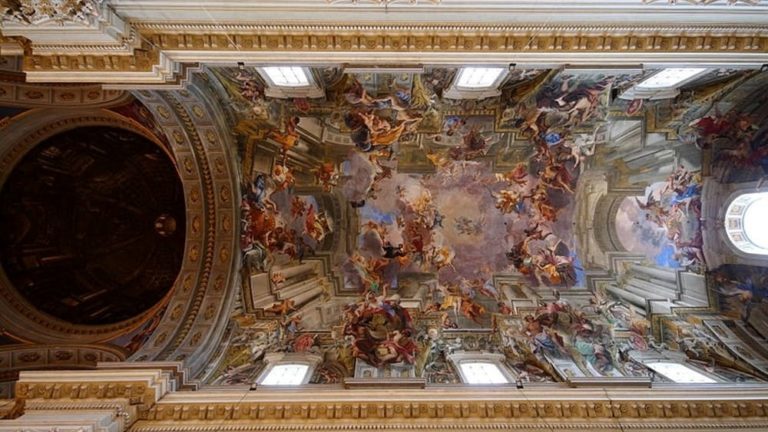
In our Rome Tour of the churches there is one that has a dome but in reality it is just an optical illusion. Find out where this particular place is located. We are talking about the church of Sant’Ignazio di Loyola which has a truly unique dome. The church of Sant’Ignazio di Loyola in Campo Marzio is a Catholic place of worship in Rome; in splendid Italian Baroque style, it is adjacent to the Roman College of which it was a university chapel and overlooks Piazza Sant’Ignazio.The works for the construction of the church began in 1626 and it was dedicated to Ignatius of Loyola, founder of the Society of Jesus, who had been canonized on 12 March 1622. The great patron of the work was Bishop Ludovico Ludovisi, nephew of Pope Gregory XV, who had died in 1623 and had canonized Ignatius of Loyola. The building has been repeatedly attributed to various architects, who worked in the first half of the seventeenth century in Rome: Domenichino, Girolamo Rainaldi, Alessandro Algardi (the majestic facade is still attributed to the latter).

Read More
venician palace in rome

Veltroni: "The places of Fascism are no longer a taboo "

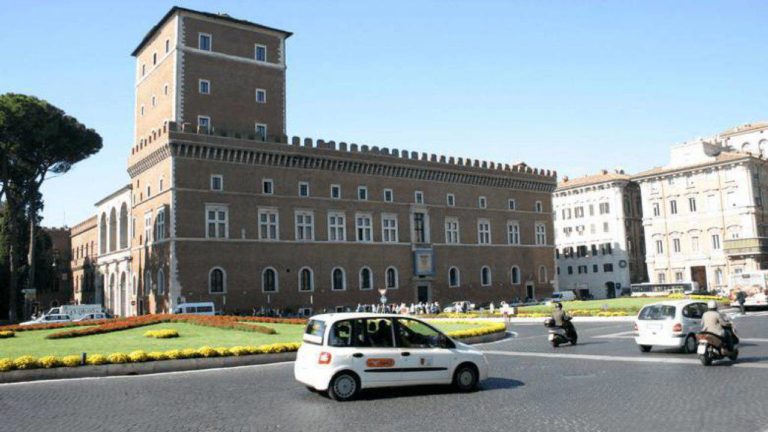
ROMEThe discovery of the last bunker of the Duce, in the Palazzo Venezia, is a first for her, Walter Veltroni, who was mayor of Rome? “I do not know anything about it and the news hit me. Especially because it tells of fragility Italian, which is the effort to come to terms with the past. How is it possible that the bunker has remained hidden for almost seventy years? It is because we have turned the page of fascism without having metabolized and understood. And so we continue to conceal the physical traces of the two decades. “

Read More
rock of the demon

The Rock of the Demon in Rome

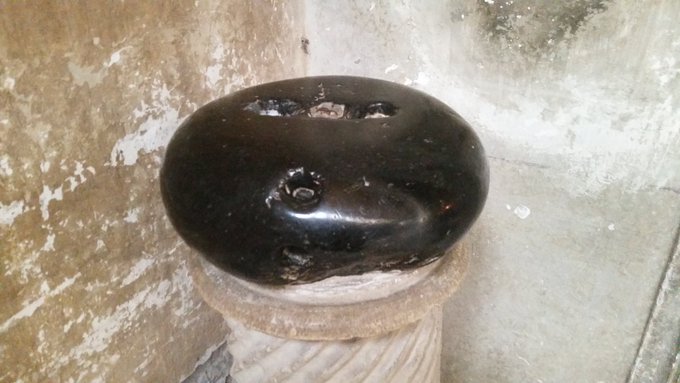
This time our little investigation leads us in the basilica of Santa Sabina. We are in Peter of Illyria square in Rome, in the center of the Aventine Hill. This area is beautiful, and Rome dominated by a period rich in legends and curiosity, and not miss chance to go back and look at something else. In the Basilica of Santa Sabina is not difficult to find on Sundays young couples who are getting married, being one of the oldest and most spectacular churches in Rome. But maybe some duct superstitious might change your mind before you make the “big step” in this place, if he knew that the devil himself is a frequent visitor to the area.

Read More