Weather in Rome

Weather Icon

Italy Rome Tour Blog

Travel tips, Food, Lifestyle, Street Art, Events and Exhibitions in Rome and all around Italy.

The Testaccio Carnival has medieval origin

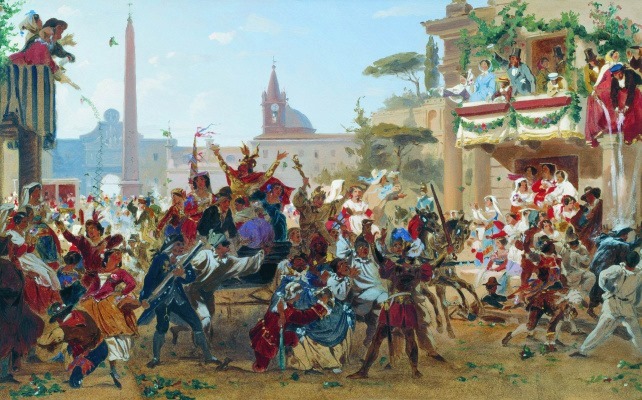
The memory of the Testaccio carnival is linked to the Ludus Testaccie: it was a celebration of the carnival genre, the first traces of which date back to 1256, when he was Pope Alexander IV. The games lasted until 1466 and were particularly cruel: the party participants enjoyed throwing the animals from the mountain; pigs, wild boars and bulls were sacrificed which the lusores then pierced, to kill and eat them. It was a closely contested race to be the first to get hold of the beasts’ flesh. The Testaccio district develops around Monte dei Cocci, an artificial hill born from the accumulation of discarded Roman amphorae. The hill has a perimeter of about one kilometer and is about 50 meters high. The area was then used as a real landfill for the disposal of the amphorae. As Historia Regni reports, the carnival opened on Monday with a race of young people, on Tuesday the Jews ran, on Wednesday the old ones. The runners were always all naked, when there was rain, cold or mud, and this resulted in a

Read More

The Forum of the Emperor Augustus in Rome

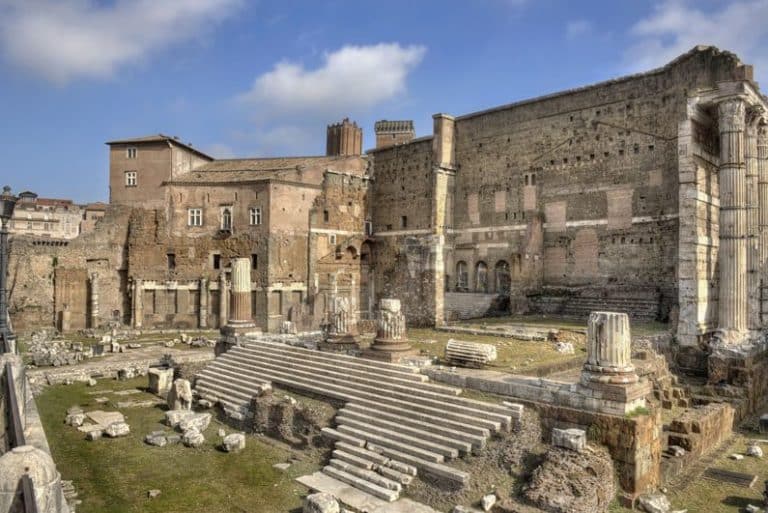
The Forum of Augustus is one of the Imperial Forums of Rome, the second in chronological order after that of Caesar. It was dominated by the temple dedicated to Mars, inaugurated in 2 BC, and in one of the arcades there was a colossal statue of the emperor. The construction of the complex was carried out for propaganda purposes and all its decoration celebrates the new golden age that begins with the principality of Augustus. The two already existing forums (the Roman Forum and that of Caesar) were no longer sufficient and a third was needed; for this he hastened to inaugurate it, without the temple of Mars being yet completed and it was established that public trials were held in it. Gaius Julius Caesar Octavian Augustus was the first Roman emperor from 27 BC. to 14 A.D. In 27 BC he returned the offices in the hands of the senate; in exchange he had a proconsular empire that made him head of the army and the Roman Senate, at the suggestion of Lucio Munazio Plco, conferred on him the

Read More
the-death-of.julio-caesar-Vincenzo-Camuccini

Why was Julius Caesar killed?

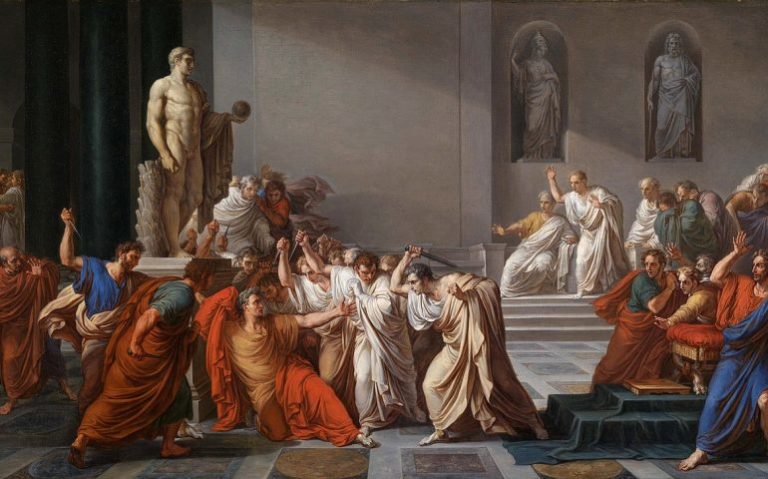
Everyone knows Julius Caesar, but few know why this very important figure of ancient Rome was really killed. Let’s find out together. Gaius Julius Caesar was a Roman military, politician, consul, dictator, pontiff, orator and writer, considered one of the most important and influential characters in history. He played a pivotal role in the transition of the government system from republican to imperial form. He was dictator of Rome at the end of 49 BC, in 47 BC, in 46 BC. with ten-year office and from 44 BC as perpetual dictator, and for this reason considered by Suetonius the first of the twelve Caesars, later synonymous with the Roman emperor. With the conquest of Gaul, he extended the dominion of the Roman res publica to the Atlantic Ocean and the Rhine; he led the Roman armies to invade Britain and Germany for the first time and to fight in Spain, Greece, Egypt, Pontus and Africa. Cesaricide is defined as the assassination of Caesar, which took place on March 15, 44 BC. (the Ides of March), by a group of about

Read More
Rome yesterday and today

Until 1800 Piazza Navona was transformed into a lake

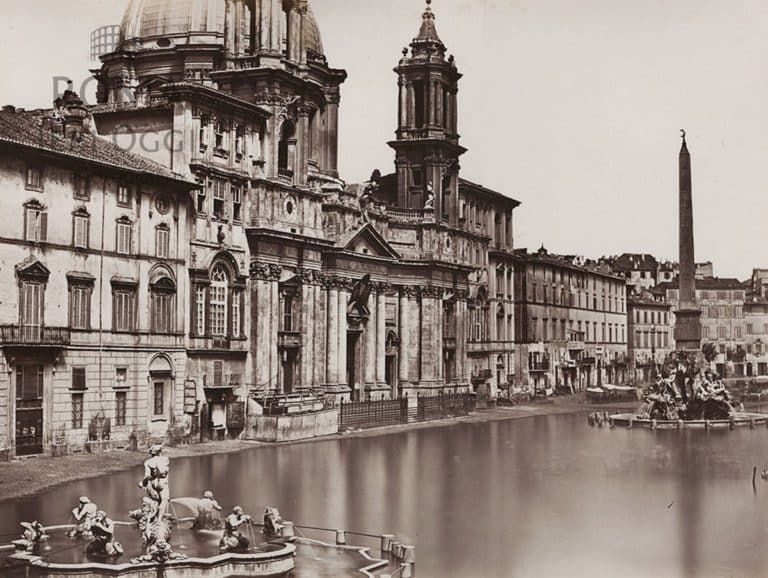
Did you know? Until 1800 piazza Navona was transformed into a lake. In 1652 the Pope began the custom of flooding Piazza Navona to give relief and refreshment to Roman citizens during the summer: every Saturday and on Sunday in August, the fountains were closed to ensure that the water overflowed from the pools to flood the square, which thus turned into a real lake. Piazza Navona is one of the most famous squares in Rome and in the world. It is one of the most spectacular and characteristic urban complexes of Baroque Rome. The square is bordered by the buildings that were built on the remains of the Stadium of Domitian: the shape and dimensions of the track are preserved. Over the centuries the space has been the scene of popular festivals, races and jousting. From the seventeenth century to the mid-nineteenth century the square, which then had a concave bottom, was partially flooded to offer refreshment and entertainment for everyone. On 23 June 1652 Innocenzo X arranged the first “Lake of Piazza Navona”, to form which, as the

Read More
porta pia

Porta Pia hundred years ago, at the Macro photographs archive Peroni

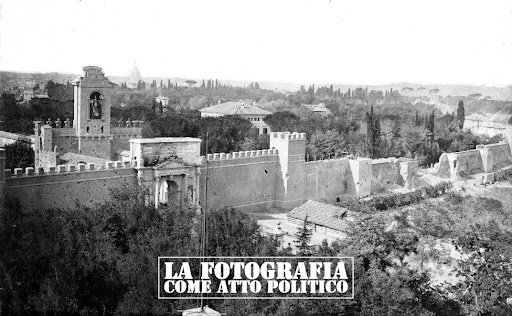
Oh, how beautiful was Rome a century ago.” Nostalgic there are always ( and there always have been ) but now have a bit ‘ of material to regret the good old days. Just to see the beautiful pictures of the Archives Peroni on display these days in the Macro Via Nizza for “alimentari” that feeling (the exhibition closes on December 8 ). The location is no accident, for many decades, in fact , the historic brewery had its own factories in Mantua via a few steps from Porta Pia, where today stands the museum , hence the full title of the exhibition , ” Portrait of district . By the establishment Birra Peroni at Macro.

Read More
venician palace in rome

Veltroni: "The places of Fascism are no longer a taboo "

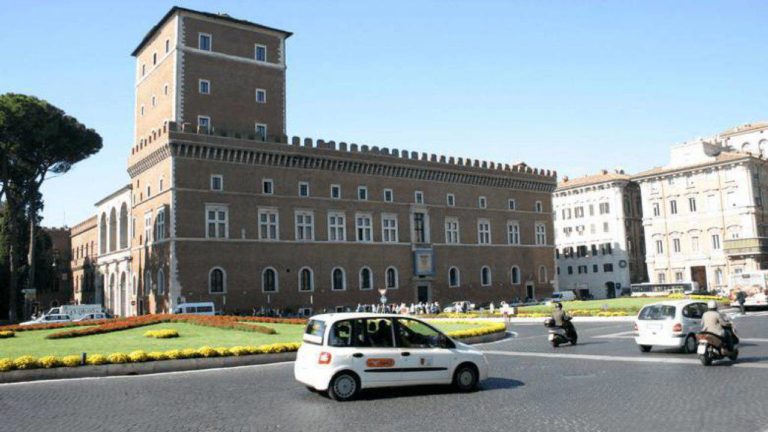
ROMEThe discovery of the last bunker of the Duce, in the Palazzo Venezia, is a first for her, Walter Veltroni, who was mayor of Rome? “I do not know anything about it and the news hit me. Especially because it tells of fragility Italian, which is the effort to come to terms with the past. How is it possible that the bunker has remained hidden for almost seventy years? It is because we have turned the page of fascism without having metabolized and understood. And so we continue to conceal the physical traces of the two decades. “

Read More

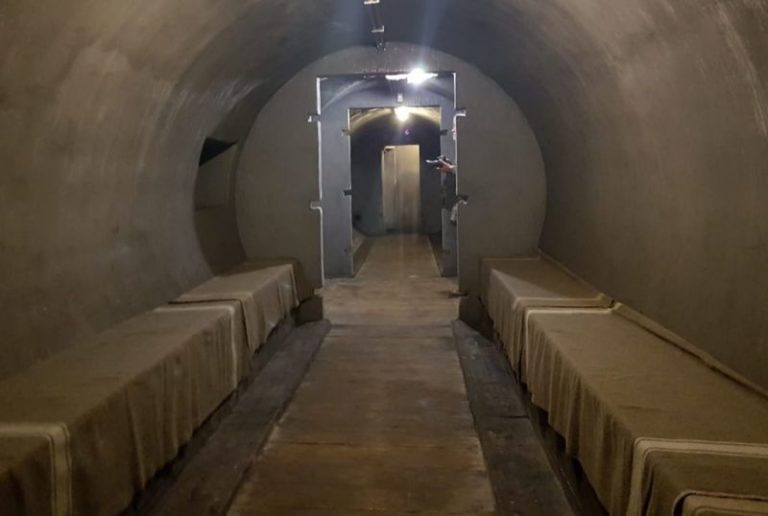
The last bunker of Mussolini

In sometime between late 2010 and early 2011, the Superintendent Anna impressive and the architect Carlo Serafini – while they proceeded the work of clearing a jam-packed and dusty storage of mackerel in the Palazzo Venezia – saw a hatch wood one meter by one meter. The superintendent stood thoughtfully looking at the hatch while the workers were working without noticing.“I remembered that background noise that runs through the building always remember that buzz and rumors spread by older workers, and hear from those who came before them,” says Anna impressive. The items they wanted in that area of the building (we are under Palazzetto San Marco) in the last years of the regime of Benito Mussolini were held works feverishly to which few have access.

Read More