Weather in Rome

Weather Icon

Italy Rome Tour Blog

Travel tips, Food, Lifestyle, Street Art, Events and Exhibitions in Rome and all around Italy.

roman monuments

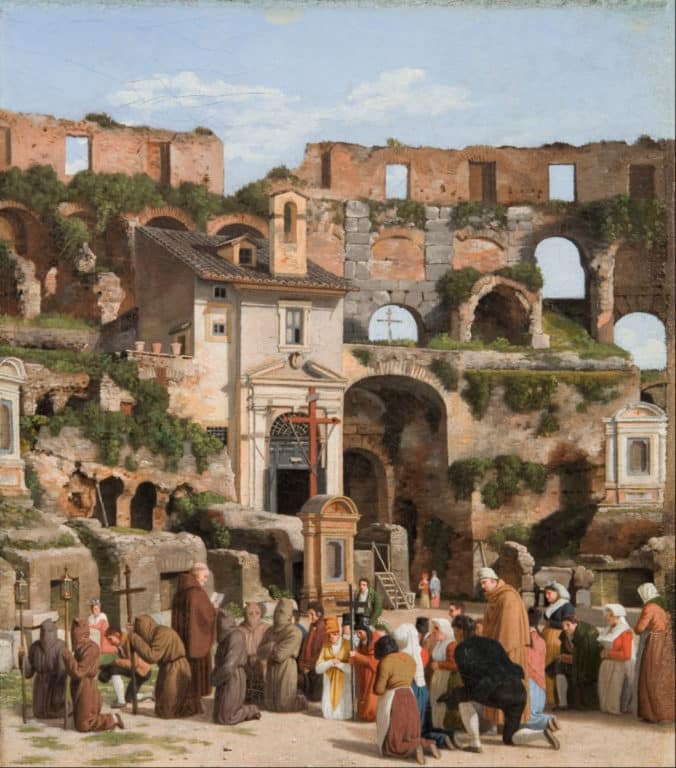
Roman monuments: the small church of the Colosseum

Roman monuments: the small church of the Colosseum. Santa Maria della Pietà, the small church of the Colosseum. Inside one of the most important monuments of Rome, the Flavian Amphitheater, in one of its large arches (to be precise the 24th arch), there is a small chapel dedicated to Santa Maria della Pietà. The church was founded between the 6th and 7th centuries. It has always been a place of worship, probably in memory of the people who died inside the Colosseum. The first information based on the church are those handed down by Cardinal Cencio Camerario, who was an illustrious historian and connoisseur of Roman churches. These documents date back to 1192, a time when it was known with the title of “Santissimo Salvatore in Rota Colisei”. In 1490 the Compagnia del Gonfalone began to represent the drama of the Passion of Christ in the center of the great arena of the Colosseum.Just like the Via Crucis which is celebrated every year starting from inside the Colosseum, retracing the stations up to the Temple of Venus and Rome. Subsequently

Read More
Colosseum-tour-first-level

The Emperors arrived in the Colosseum using a secret passage

The Emperors arrived in the Colosseum using a secret passage. Under the Flavian Amphitheater, a gigantic structure for shows built in the imperial era, there is (and has recently been included in a recovery project), a dense series of tunnels that allowed gladiators, beasts and workers to move, work and enter the scene without being seen by the public, if not at the last moment. One passage in a particular way allowed the emperor to appear unexpectedly on stage: a spectacular move that allowed him to show himself to the public suddenly and in the middle of the same show. The Colosseum is the most grandiose spectacle machine of antiquity and behind the scenes it hid and hides a very complex underground world, invisible to the nearly 80,000 people sitting in the stands. In this labyrinthine underground citadel everything was functional to the staging on the arena: the arrival and deployment of the gladiators, the passage of the beasts from the cages to the arena. But also the entrance of the emperor escorted by the praetorian guard who entered the

Read More
ghost-tour-of-rome

The ghost of Messalina wanders near the Colosseum at night

Legend or rumor? The ghost of the beautiful and lustful matron wanders among the ruins near the Flavian Amphitheater. Stories to frighten the children or curiosity embellished by the testimony of some Roman? Rome historical city, place of myths and legends, land of ghosts and tales that ignite the imagination and curiosity of visitors but not only. There, where history pervades every street and every stone, the suggestion of the holiday leads to hear and perceive the sighs of some of the great historical figures who have populated this incredible, wonderful city. This is why it is the Romans themselves who embroider unusual stories that refer to millenary ago or to old situations that are relived in the speeches of the elderly. A custom that is common in Rome, so much so that even the site of Roma Turismo, in its texts, recalls these legendary figures. Occult presences from the tormented life, whose soul has been trapped between the world of the living and that of the dead, and at night they wander in the places that saw them as

Read More
Walking tour of the Colosseum in Rome

Do you know why the Colosseum collapse in half?

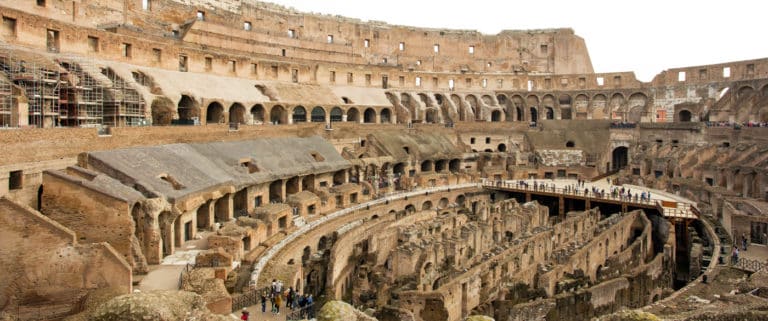
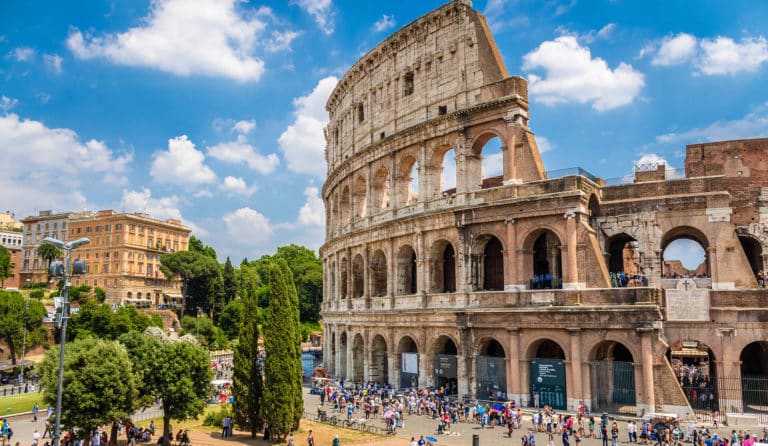
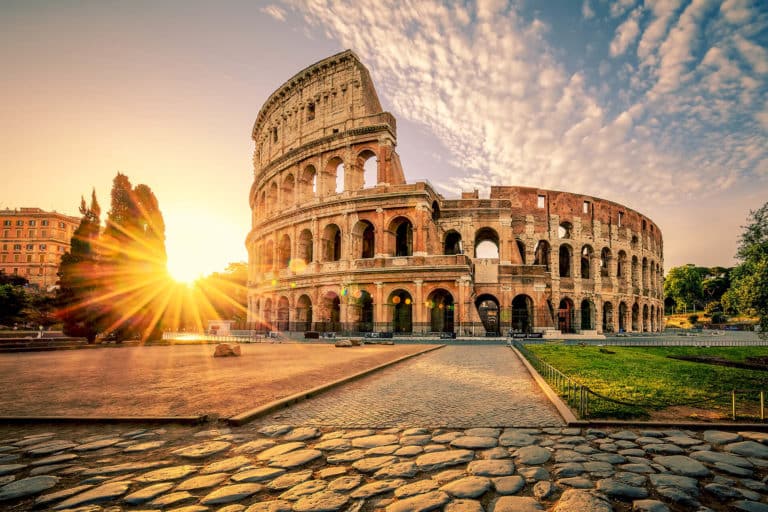
The Colosseum, also known as Amphitheatrum Flavium (Italian: Flavian Amphitheater), located in the center of the city of Rome, is the largest amphitheater in the world. It could hold between 50,000 and 87,000 people, that’s the most important Roman amphitheater, as well as the most impressive monument of ancient Rome that has come down to us. Known throughout the world as a symbol of the city, it is also one of the symbols of Italy. It has been on the Unesco World Heritage List since 1980 and in 2007 it was also included among the New Seven Wonders of the World. Its construction was started by Vespasian in 71/72 AD. and was inaugurated by Tito in 80. Notions that many of us have studied, but not everyone knows that the ancient structure of the amphitheater collapsed only half due to the ground on which it rests. In fact, in 1349 a catastrophic earthquake, with its epicenter in the Central Apennines, destroyed part of it, making it asymmetrical. A collapse also due to the particular type of subsoil on which it

Read More
Colosseum Rome - Gold Walking Tour

What happened to the marbles that decorated the Colosseum?

Did you know? What happened to the marbles that decorated the Colosseum? The Colosseum is one of the symbolic monuments of Rome in the world: gigantic, majestic, of great impact and with an “important” history. But what we see today is an amphitheater… …very different from what could be admired until the imperial period, when it was covered with marble, statues and beautiful decorations. Let’s find out what happened to all these ornaments and what are the monuments where you can admire the old marble of the Colosseum. The grandeur has remained the same, the marbles are very rare in the magnificent Flavian Amphitheater, an imposing structure built in the Flavian era on an area at the eastern edge of the Roman Forum. Its construction was started by Vespasian in 70 AD. and inaugurated by Tito in 80, with further changes made during Domitian’s empire in 90. It is the largest amphitheater in the world, capable of holding an estimated number of spectators between 50,000 and 87,000. In imperial times it was covered with statues and decorations of Mark, even

Read More
colosseum rome

The Colosseum was covered by a giant awning that weighed 24 tons and was operated by 1000 expert sailors

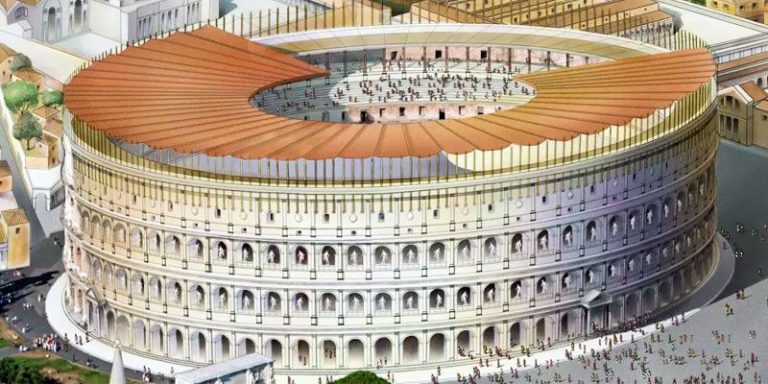
The velarium was a masterful work of engineering. Its positioning, extremely complicated, was carried out by very experienced sailors, a detachment of the Classis Misenensis (military fleet of Miseno), the Roman fleet stationed at the head of Miseno. Modern estimates speak of a total weight of about 24 tons and everything was handled by 1000 sailors. The velarium was a movable fabric cover made up of several hemp sheets (or veils), which was used in Roman theaters and amphitheaters to ensure spectators adequate protection in bad weather or on hot days. The Colosseum had its own velarium, a gigantic curtain that was fixed to 240 protruding support poles, inserted in as many quadrangular holes, corresponding to 240 protruding stone shelves. From their top a complex system of ropes began, along which huge “sails” were opened and stretched, a sort of structure suspended over the arena that allowed the cavea and part of the arena to be covered. A ring in the center favored the ventilation of the amphitheater; to reduce unpleasant odors, jets of scented water and perfumed essences were

Read More
gladiator fights

What happened in gladiator fights?

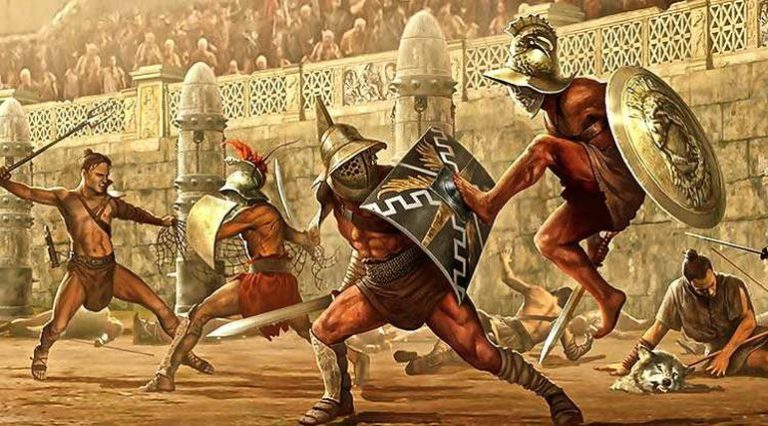
Who really were the gladiators and what really happened in the Colosseum in Rome and in the other amphitheaters of the Roman Empire? The name “gladiators” derives from gladius, the sword of the past Roman legionary that they also use by wrestlers. The practice of duels between gladiators comes from the Etruscans and like many other aspects of Etruscan culture, this too was adopted by the Romans. The first gladiator show probably took place in 264 BC. In 105 BC the games became public. The gladiators were on average between 20 and 35 years old (in the majority, however, 30), in line with the life expectancy of the time. And the height was also in line with the time: 168 cm. The fighters could be real professionals, new inexperienced gladiators, convicts, criminals, slaves, convicts, prisoners of war, Christians, or free men, without distinction of race or sex (the fights of gladiators, extremely rare, were however always the most requested). Gladiators were trained in special schools. The most prestigious was the Ludus Magnus.The gladiators stayed in cells arranged according to an

Read More
gladiators fight at the colosseum

Did you know? 500,000 men and a million animals were sent to die in the Flavian Amphitheater known as the Colosseum

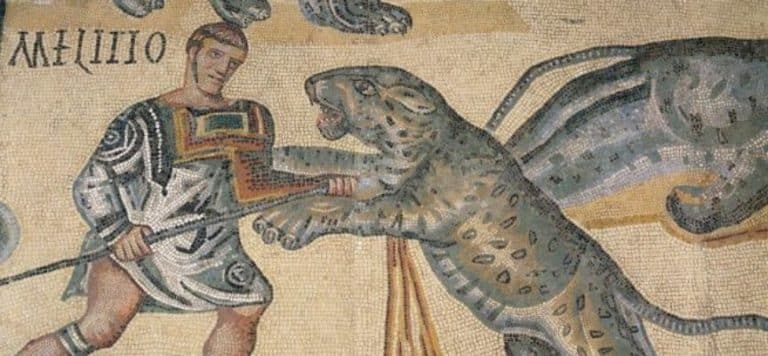
The shows in ancient Rome and in the Colosseum history in particular were numerous, open to all citizens and generally free; some of them were distinguished by the greatness of the preparations and by the cruelty. The Romans preferred gladiator fights, those with ferocious beasts (venationes), reproductions of naval battles (naumachia), chariot races, athletics competitions, theatrical performances of mimes and pantomimes The first gladiator show probably took place in 264 BC. In 105 BC the games became public. The number of gladiatorial shows increased enormously during the Empire. The Flavian dynasty, which began with the emperor Flavius Vespasian, built the largest and most famous amphitheater in the world, the Flavian amphitheater, later known as the Colosseum. Here, according to an approximate count, it is counted that 500,000 men and at least one million animals died. The favorite show was that of horse racing. When the emperor appeared in the circus, in the amphitheater or in the theater, the crowd greeted him by standing up and waving white handkerchiefs, paying homage to him and showing him their presence and emotional, almost

Read More
Walking tour of the Colosseum in Rome

Did you know? The Colosseum is the most visited monument in the world

This was determined by a ranking drawn up by Tripadvisor, which together with an Istat survey confirm that the most popular destination for tourists from all over the planet is Rome. The Flavian amphitheater, what everyone calls the Colosseum, is therefore also confirmed as beautiful 2019. It was also in 2017 and 2018. To establish it Tripadvisor. The iconic image of Rome and the beautiful country is one of those destinations that those who love to travel put at the top of the list of places to visit. Still according to the same ranking, the Vatican Museums and Piazza San Marco in Venice are the other two destinations in Italy most desired by tourists from all over the world. The Tripadvisor ranking that concerns all the destinations of the planet, in addition to the Louvre in the top ten are the Statue of Liberty, the Eiffel Tower and the Sagrada Familia.

Read More

Mini Colosseum Emperor Commodus found in Genzano

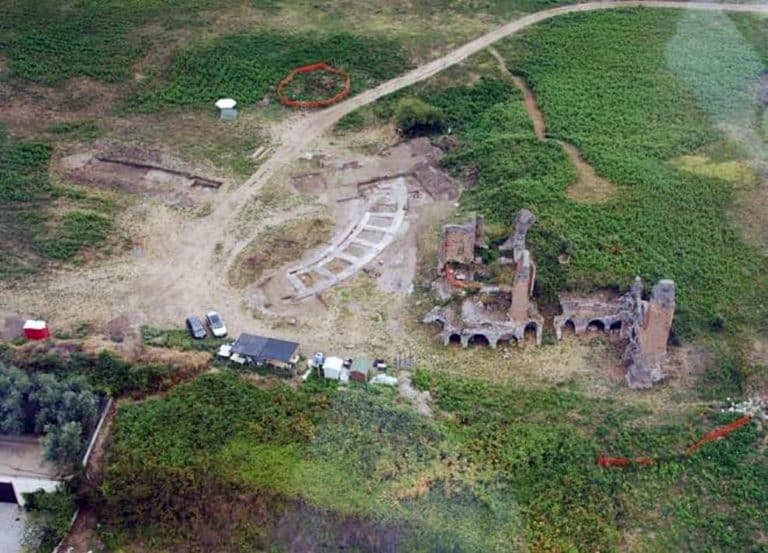
That the emperor Commodus, the controversial son of Marcus Aurelius, had a passion for gladiatorial games and fighting against the beasts, he was known. No coincidence that the historical sources told that the heir of the emperor philosopher had a private amphitheater in his native Lanuvio where he loved to tempt fate, falling dressed as a gladiator in the arena and killing wild beasts. But what seemed so far only reported by a backstory biography of the ‘Historia Augusta’, now has its archaeological evidence. The confirmation that Commodus had really his personal temple to erect other, already dubbed by scholars as “the little Coliseum.”

Read More