Weather in Rome

Weather Icon

Italy Rome Tour Blog

Travel tips, Food, Lifestyle, Street Art, Events and Exhibitions in Rome and all around Italy.

latin language in ancient rome

Latin was the most spoken language in ancient

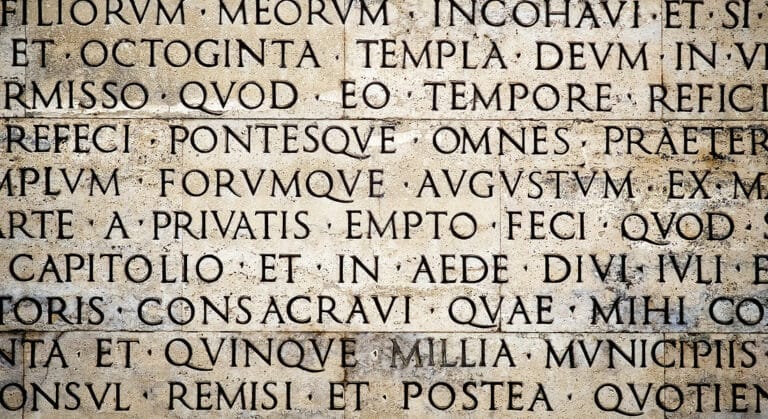
If we consider the continents known and closest to us, until the Middle Ages Latin was certainly the most widespread language. Naturally thanks to the hegemony of Rome, which spread Latin, a bit like what happened today for English, which has become the unofficial language of the whole world. The Latin language was the first of all European languages to enjoy an international aura and the status of a universal language. Now declared extinct, Latin was the official language of ancient Rome, then of the entire Western Roman Empire until its fall (which occurred in 476 AD), one of the most powerful empires – and one of the most fascinating – in history. An extraordinary influence, so much so that of all the so-called “dead” languages, Latin is undoubtedly still today the most “alive”, studied by millions of people all over the world and even considered an official language by the Catholic Church. Everywhere it is considered the effective language of Roman antiquity, the very symbol of its history and culture since the earliest times. Latin and Greek were the

Read More
roman monuments

Roman monuments: the small church of the Colosseum

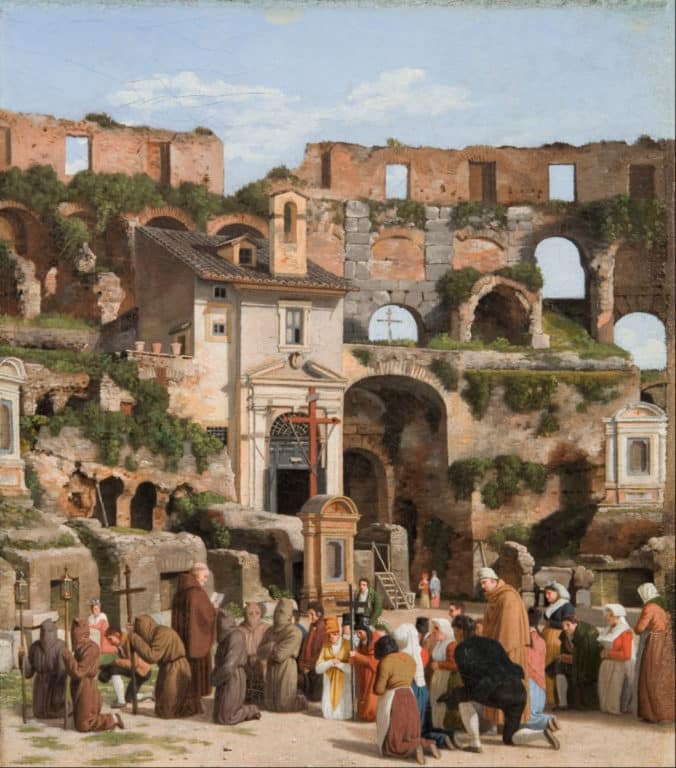
Roman monuments: the small church of the Colosseum. Santa Maria della Pietà, the small church of the Colosseum. Inside one of the most important monuments of Rome, the Flavian Amphitheater, in one of its large arches (to be precise the 24th arch), there is a small chapel dedicated to Santa Maria della Pietà. The church was founded between the 6th and 7th centuries. It has always been a place of worship, probably in memory of the people who died inside the Colosseum. The first information based on the church are those handed down by Cardinal Cencio Camerario, who was an illustrious historian and connoisseur of Roman churches. These documents date back to 1192, a time when it was known with the title of “Santissimo Salvatore in Rota Colisei”. In 1490 the Compagnia del Gonfalone began to represent the drama of the Passion of Christ in the center of the great arena of the Colosseum.Just like the Via Crucis which is celebrated every year starting from inside the Colosseum, retracing the stations up to the Temple of Venus and Rome. Subsequently

Read More
Forum-boario-rome

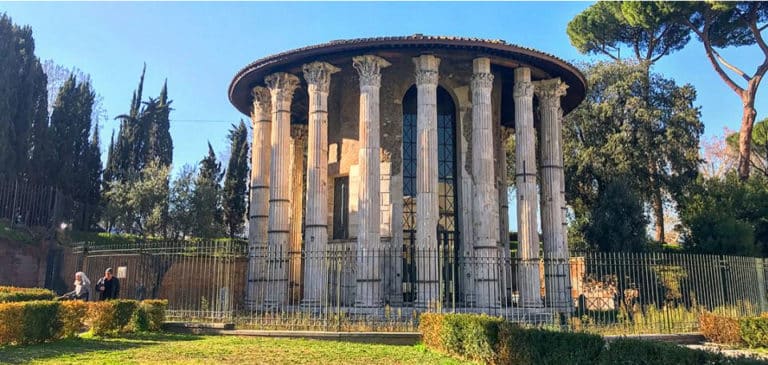
The oldest building standing in the Eternal City

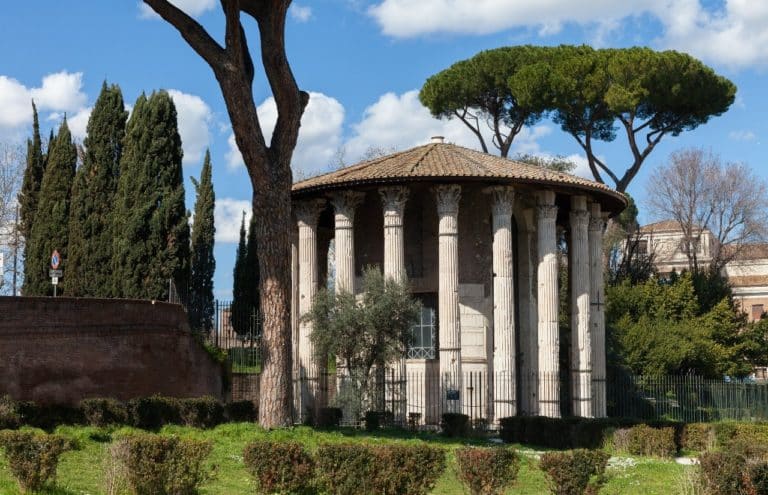
The oldest building standing in Rome is the temple of Hercules Victor and dates back to the second century BC and today represents the oldest building in Rome still standing. This temple is sometimes still referred to as the Temple of Vesta and the error is due to its circular shape which makes it similar to the real Temple of Vesta located in the Roman Forum. All this due to an incorrect attribution, born during the Renaissance. A curious peculiarity that makes it even more mysterious and fascinating. The temple is circular in shape with twenty Corinthian columns surrounding the cylindrical cell and rests on a ring foundation on a tuff block platform. A favissa opens in the floor of the cell, a place where the ancient Romans deposited votive objects, consisting of a deep well, where the burnt remains of sacrifices were collected. ROME TOUR AVAILABLE HEREThis temple confirms the economic power that the Roman merchants had. In fact, it is said that a rich merchant commissioned this work which was dedicated to Hercules protector of the oil producers,

Read More
Arch-of-Constantine-at-Night-Rome

The Arch of Constantine is the largest surviving Roman triumphal Arch

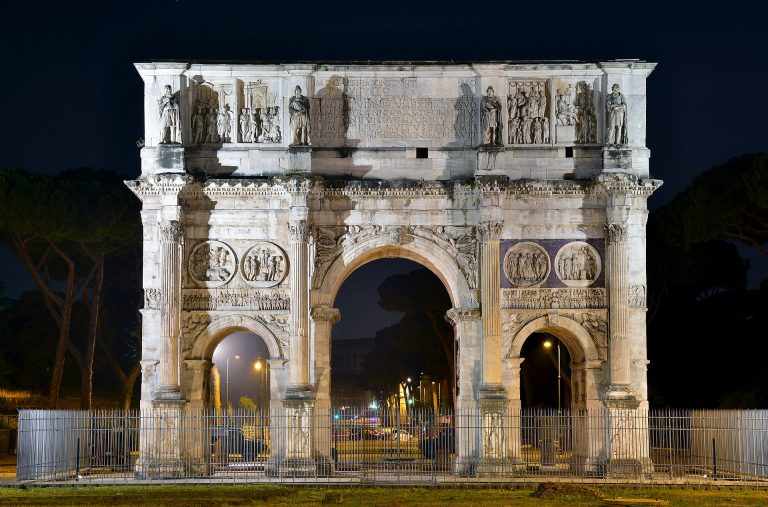
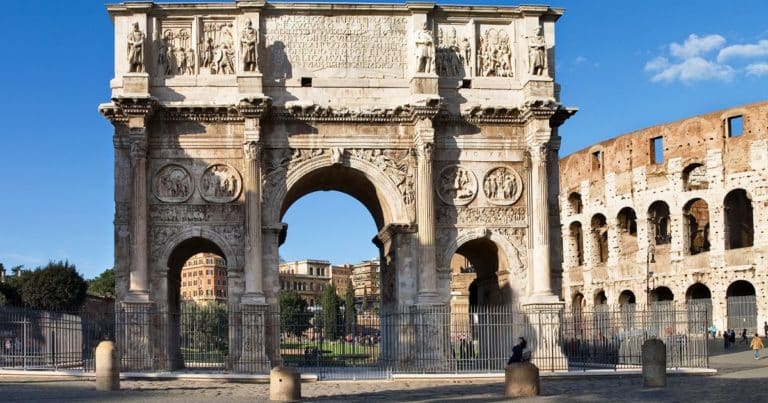
The Arch of Constantine is one of the three ancient triumphal arches left in Rome. The other two are the arch of Tito (approximately 81–90) and the Arco di Settimio Severo (202–203). It was the last great monument of imperial Rome. It was erected to commemorate the victory of Costantino I on Maxentius. Located along the route traveled by the triumphs, in the stretch between the Circus Maximus and the Arch of Tito, it is the largest honorary arc that came up to us. He was erected on the ancient “via Triumphalis”, (the path reserved for the processions of the triumphant ones who march towards the Capitol), to celebrate the battle at Ponte Milvio of 312 AD, when the emperor defeated the rival Maxentius. As reported by the site of the Colosseum park, the decoration in relief marble slabs was conceived and created in the Constantinian age according to a unitary project, using mostly bare materials from other imperial monuments. On the main faces of the arch and on the sides, according to symmetrical schemes, reliefs of the age of

Read More
view-marcellus-theatre

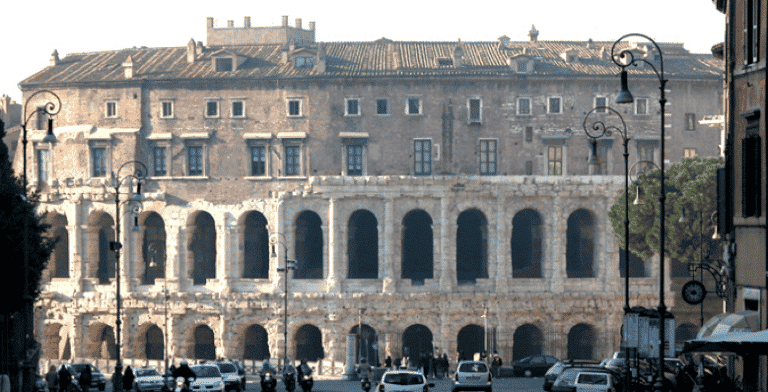
Marcellus Theatre in Rome and its history

Set among the ruins of the Theater of Marcellus, one of the oldest buildings of ancient Rome, at the foot of the Capitoline Hill, there is an old noble palace, Palazzo Savelli Orsini. Let’s discover the secrets of this prestigious apartment. From the Middle Ages onwards it has undergone various vicissitudes and various changes of ownership: it was bought by the Fabi called di Pescheria and then by the Pierleoni. In the fourteenth century it became the property of the Savellis who commissioned Baldassarre Peruzzi to build the palace. In the eighteenth century the Orsini dukes of Gravina became owners who, through some works, gave it the shape we know today. In the thirties of the twentieth century, some expropriations were carried out which had the aim of freeing additional houses that had formed in the arches. In the 1950s the building passed to Iris Origo, the author of “The war in Val d’Orcia, an Italian diary”. Today the building is made up of various apartments. In the main, the master room includes three bedrooms, the great hall, the library,

Read More
column-of-trajan

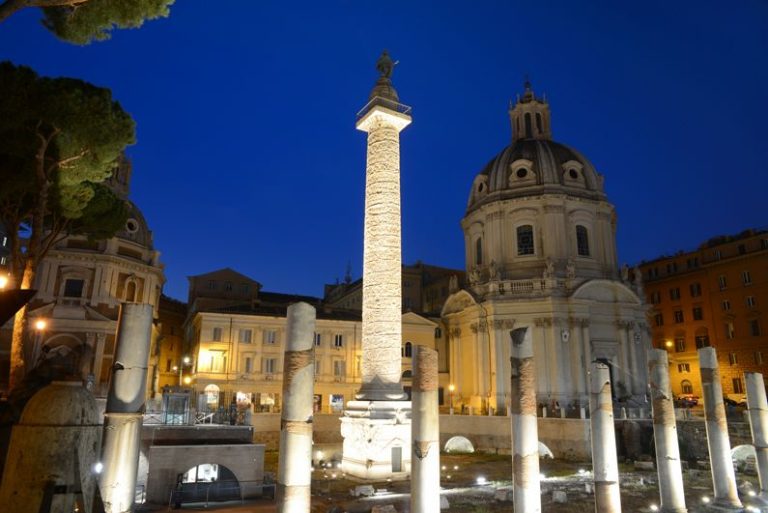
The Trajan’s Column risked being dismantled and taken to Paris

The Trajan’s Column is a monument erected almost two thousand years ago in Rome to celebrate the conquest of Dacia (now Romania) by the Emperor Trajan. This is the first coclide column ever erected, one of the masterpieces of imperial art. During the French occupation it risked being dismantled and taken to Paris. Here because. These were the intentions of Napoleon’s military leader in Rome, General François René Jean de Pommereul. A proposal blocked by the very high transport costs and by the papal administrative obstacles that slowed down the process. The French then raised the Vendôme Column, erected in 1810 in Paris by Napoleon I after the Battle of Austerlitz in imitation of the one erected in Rome, in honor of Trajan. The column located in the Trajan’s Forum, in the northern position of the Roman Forum, was inaugurated in 113 and is formed by a long spiral-shaped frieze that winds, from bottom to top, on the entire shaft of the column and describes the wars of Dacia (101-106). The frieze reminded everyone of Trajan’s exploits by celebrating him

Read More
temple-of-hercules-rome

Which is the oldest standing Roman building?

Leaving behind the Basilica of Santa Maria di Cosmedin and crossing the road, you can enjoy the view of the Temple of Hercules Victor. The temple is protected by a large fence but it is still possible to see the beauty of the whole structure.The construction of the temple dates back to the second century BC and today represents the oldest building in Rome still standing. This temple is sometimes still referred to as the Temple of Vesta and the error is due to its circular shape which makes it similar to the real Temple of Vesta located in the Roman Forum. All this due to an incorrect attribution, born during the Renaissance. A curious peculiarity that makes it even more mysterious and fascinating. The temple is circular in shape with twenty columns surrounding the cylindrical cell and rests on a ring foundation on a tuff block platform. A favissa opens in the floor of the cell, a place where the ancient Romans deposited votive objects, consisting of a deep well, where the burnt remains of sacrifices were collected. This

Read More
ROMAN-BATH-caracalla

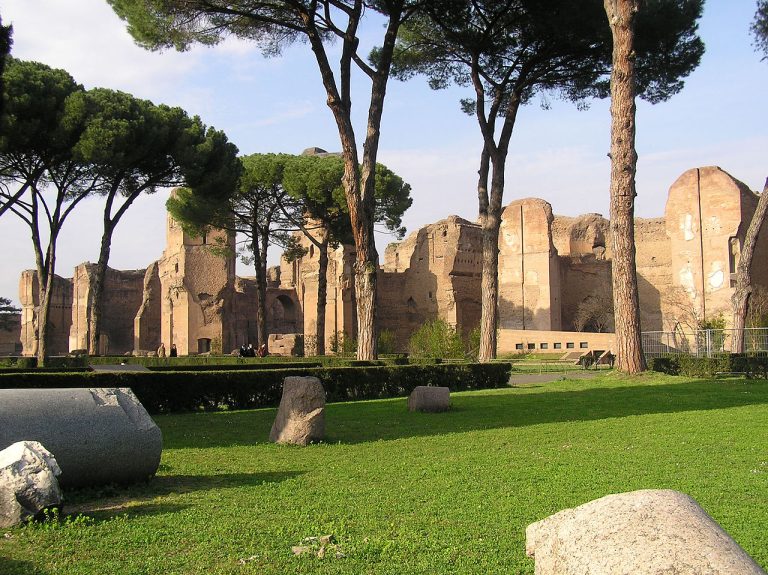
The Baths of Caracalla were a gigantic sports center of ancient Rome

Rich in marble, frescoes and mosaics, the Baths of Caracalla were a gigantic sports center, with hot and cold baths, swimming pools, saunas, gymnastics and meeting rooms embellished with domes, colonnades and gardens. Here, citizens loved to relax, play sports, meet for an appointment (a bit like what happens now in fitness centers or even in shopping centers). The baths were a unique complex in terms of size and decoration, these baths represent one of the best preserved large imperial buildings of antiquity. The baths of Caracalla or Antoniniane are still preserved for most of their structure and do not have modern buildings around them. They were built between 212 and 216 AD. da Caracalla, son of Septimius Severus, who inaugurated the central building in 216 AD. The rectangular plan is typical of the “great imperial baths”: a unique place where you can swim, exercise and care for the body, but also a place for strolling and studying. The central block is the one intended for the Baths: here are the calidarium, the tepidarium, the frigidarium and the natatio. On

Read More
Walking tour of the Colosseum in Rome

Do you know why the Colosseum collapse in half?

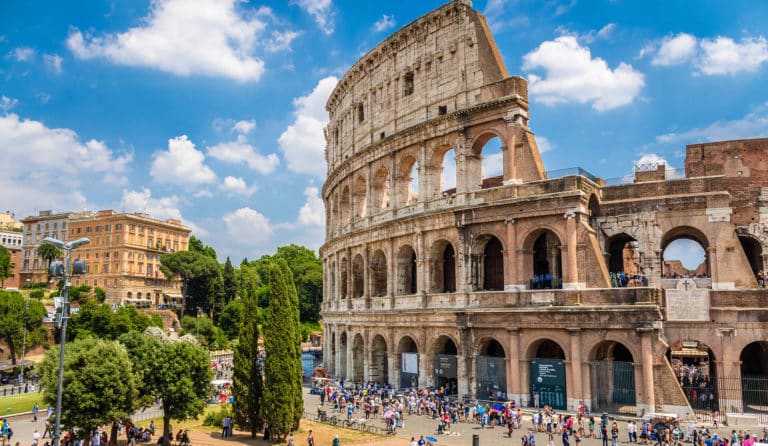
The Colosseum, also known as Amphitheatrum Flavium (Italian: Flavian Amphitheater), located in the center of the city of Rome, is the largest amphitheater in the world. It could hold between 50,000 and 87,000 people, that’s the most important Roman amphitheater, as well as the most impressive monument of ancient Rome that has come down to us. Known throughout the world as a symbol of the city, it is also one of the symbols of Italy. It has been on the Unesco World Heritage List since 1980 and in 2007 it was also included among the New Seven Wonders of the World. Its construction was started by Vespasian in 71/72 AD. and was inaugurated by Tito in 80. Notions that many of us have studied, but not everyone knows that the ancient structure of the amphitheater collapsed only half due to the ground on which it rests. In fact, in 1349 a catastrophic earthquake, with its epicenter in the Central Apennines, destroyed part of it, making it asymmetrical. A collapse also due to the particular type of subsoil on which it

Read More
Domus Aurea, Roma: Storia e Descrizione della Residenza Imperiale di Nerone e la famosa Sala Ottagonale

The Domus Aurea re-opens to the public after eight years

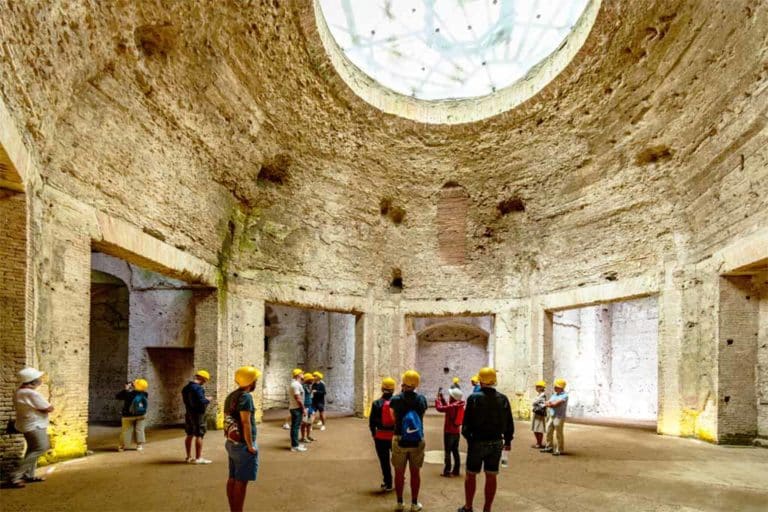
The vertigo to see up close stucco and frescoes, the same who had so influenced the Renaissance artists who first came down in the subterranean newly discovered on Opium Hill. Helmet on his head and walking shoes ready to climb on scaffolding high as ten meters. Who knows, for once, those who seem to shipyards ‘ infinite ‘ and inaccessible, does not allocate breathtaking surprises. And that’s exactly what ‘s going to happen to the impressive restoration site of the Domus Aurea, closed since 2006 for risk collapse and structural failure. Eight more months of waiting and Nero’s house, an absolute masterpiece of antiquity, but at the same time fragile and weak creature will finally open its doors to the public. Not all of the monumental complex, sure, but only certain portions of which have been wisely made safe. The news was announced by the blog ‘author’ of the Domus Aurea, the online diary kept by the director Fedora Filippi, and the entire technical staff of the Superintendence of Cultural Heritage of Rome, and confirmed by the offices of Palazzo

Read More